Rigid closed-cell structural foam context
Composite sandwich structures
CNC, hot-pressing, and bonding pathways
Project-specific technical data request
Sandwich structure primer
A core is part of a complete panel system.
Catalog / specification frame
Material role inside the sandwich
The foam core sits between skins and contributes to the geometry, separation, stiffness concept, and manufacturing logic of a sandwich structure. The final laminate system and component objective determine the information required for selection.
From core blank to component-ready shape
Where a drawing calls for contours, grooves, holes, or formed geometry, core preparation can be planned with CNC machining or other project-specific processing routes before composite manufacturing.
Read the core as part of the laminate system
A PMI core should be specified with the surrounding sandwich construction in mind. The functional question is not simply which foam is available; it is how the core form, skin construction, adhesive or resin route, and finished geometry work together. The component drawing, manufacturing sequence, and operating context are the practical starting points for the selection discussion.
Translate the part drawing into a core form
A planar panel, a curved shell, and a highly featured internal structure create different preparation needs. A flat PMI sheet may be a starting blank, while a block or custom core pathway may be more relevant when the drawing includes 3D profiles, deep reliefs, channel geometry, holes, or locally defined interfaces. CAD input makes this assessment more efficient.
Keep density and performance requests attached to the right grade
Density is an important selection input, but it is not a complete technical specification. The applicable grade, mechanical and thermal data, thickness, processing window, and dimensions must be confirmed using the relevant technical datasheet and the actual project requirements. The site therefore directs technical-value requests into a project-specific review rather than publishing generic performance assumptions.
Prepare a concise engineering RFQ
A strong first enquiry includes the component application, CAD or drawing if available, proposed core form, any known density or thickness requirement, intended composite process, quantity context, and the specific engineering question. This lets the review connect material options to machining, forming, inspection, packaging, and the downstream composite workflow.
What PMI structural foam means in a sandwich component
A sandwich panel works because the face sheets and the core do different jobs. The skins carry much of the in-plane load and provide the outer surfaces; the core separates those skins, supports the panel geometry, and gives the laminate system depth. PMI foam is discussed here as a rigid closed-cell core family within that larger construction. The final structural response belongs to the full panel design, not to a foam label alone.
Selection begins with material form, thickness and geometry
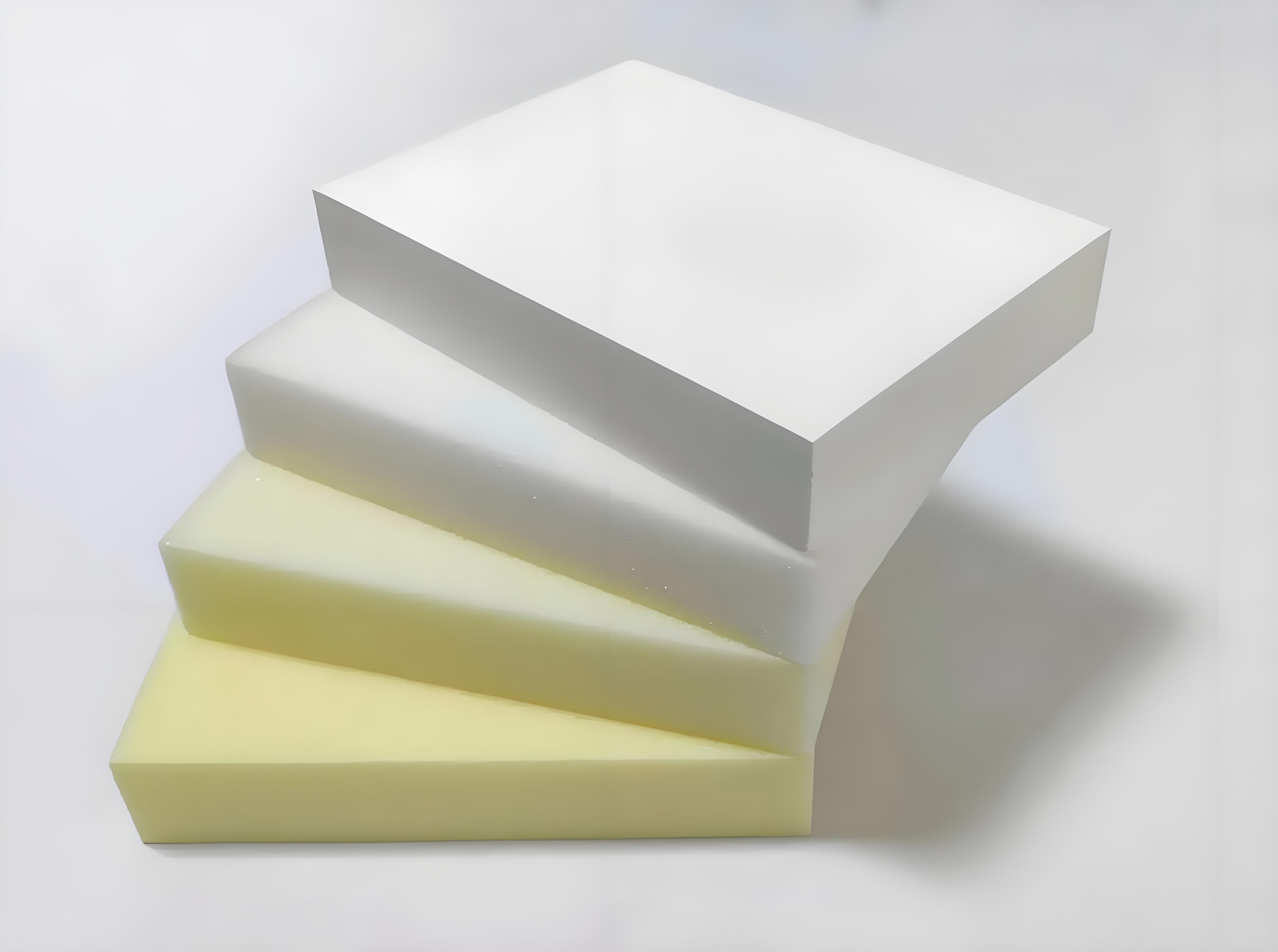
The useful first distinction is between a flat sheet or blank, a block intended for machining, a pre-cut form, and a more complex 3D or thermoformed pathway. Thickness is part of the finished structural geometry and needs to be considered with the skins, curvature, interfaces and process route. A drawing makes it possible to review the right starting form before a project commits to a preparation method.
Processing compatibility is a documented project question
Autoclave, prepreg, RTM, vacuum infusion, bonding and other composite routes each introduce their own material, tooling and handling questions. Rather than assume universal compatibility, the review should identify the intended laminate system, cure or processing context, component geometry and applicable PMI grade documentation. That keeps the material discussion traceable to the actual part and its production route.
CNC machining turns a core blank into a component interface
CNC preparation is relevant when a core needs controlled outlines, steps, pockets, holes, grooves, channels, curves or other interfaces before lay-up. The CAD model should clarify which surfaces are functional, what geometry is controlled by a drawing, and how the core will be supported, inspected and protected before it moves to the composite stage.
Quality, packing and storage should follow the component workflow
A core review can define the reference geometry, visible surfaces, handling risks, part marking, feature protection and packing context expected by the next operation. Storage and release requirements must follow the selected grade documentation and project instructions. This page does not replace a quality plan; it helps assemble the inputs needed to create one.
Use the RFQ to connect engineering and procurement
A useful request includes the component or application, drawing or CAD package, expected core form, thickness or density target if already defined, intended composite process, quantity context, inspection needs and delivery question. Supplying the known inputs in one brief prevents a material enquiry from becoming disconnected from geometry, machining or the final sandwich structure.
Related questions
Questions that make the next engineering conversation more useful.
01Is PMI Foam Core specified by density alone?
No. Density is one input among material grade, thickness, geometry, laminate system, process conditions, and the component’s intended function. Confirm the applicable grade and technical values against the project documentation and datasheet.
02When should a PMI core be CNC machined?
CNC machining is useful where the finished core needs contours, holes, grooves, 3D features, or interfaces that cannot be obtained from a flat blank alone. The drawing and process route determine the appropriate preparation method.
03What is PMI foam used for?
PMI foam is discussed for lightweight sandwich composite projects where the core needs to be considered with face sheets, geometry and the downstream manufacturing route. The suitable grade and form are confirmed for the actual component.
04Why use a foam core in a sandwich panel?
The core creates separation between the skins and becomes part of the panel geometry and structural concept. The role of the core must be evaluated alongside the laminate design, thickness, component shape and process.
05Can PMI foam be thermoformed?
Thermoforming questions are project-specific. Component contour, material documentation, thickness, tooling and downstream sequence should be reviewed together before a forming route is selected.
06Can PMI foam be used with prepreg or RTM processes?
The intended process should be identified in the project brief and checked against the applicable PMI grade documentation, laminate system and component requirements. This page does not state a universal processing approval.
07How does thickness affect a PMI core discussion?
Thickness is part of the final sandwich geometry. It should be considered together with skins, curvature, interfaces, selected form and the component’s engineering requirements rather than as an isolated catalogue field.
08What information is needed for a custom PMI foam core?
Share the component application, available CAD or drawing, target geometry, known thickness or material direction, composite process, quantity context and any inspection or documentation requirement.
09How should technical values be requested?
Request the applicable technical datasheet for the proposed grade and verify it against the component and process. Generic web values are not a substitute for grade-specific documentation.
10What should a buyer include in a PMI foam RFQ?
A buyer should include part use, drawing files, dimensions or geometry, expected process, quantity, known material request, quality or packing needs and the decision that still requires technical review.
11How should pmi foam core be specified?
Start with the component, laminate concept, operating conditions, geometry, and manufacturing route. The applicable material grade and technical data should be confirmed against the specific project.
12Can a drawing be reviewed before a quotation?
Yes. STEP, STP, STL, DXF, DWG, PDF, and ZIP files can be submitted with an RFQ so the team can review the core form, machining scope, and information required for a project-specific response.