
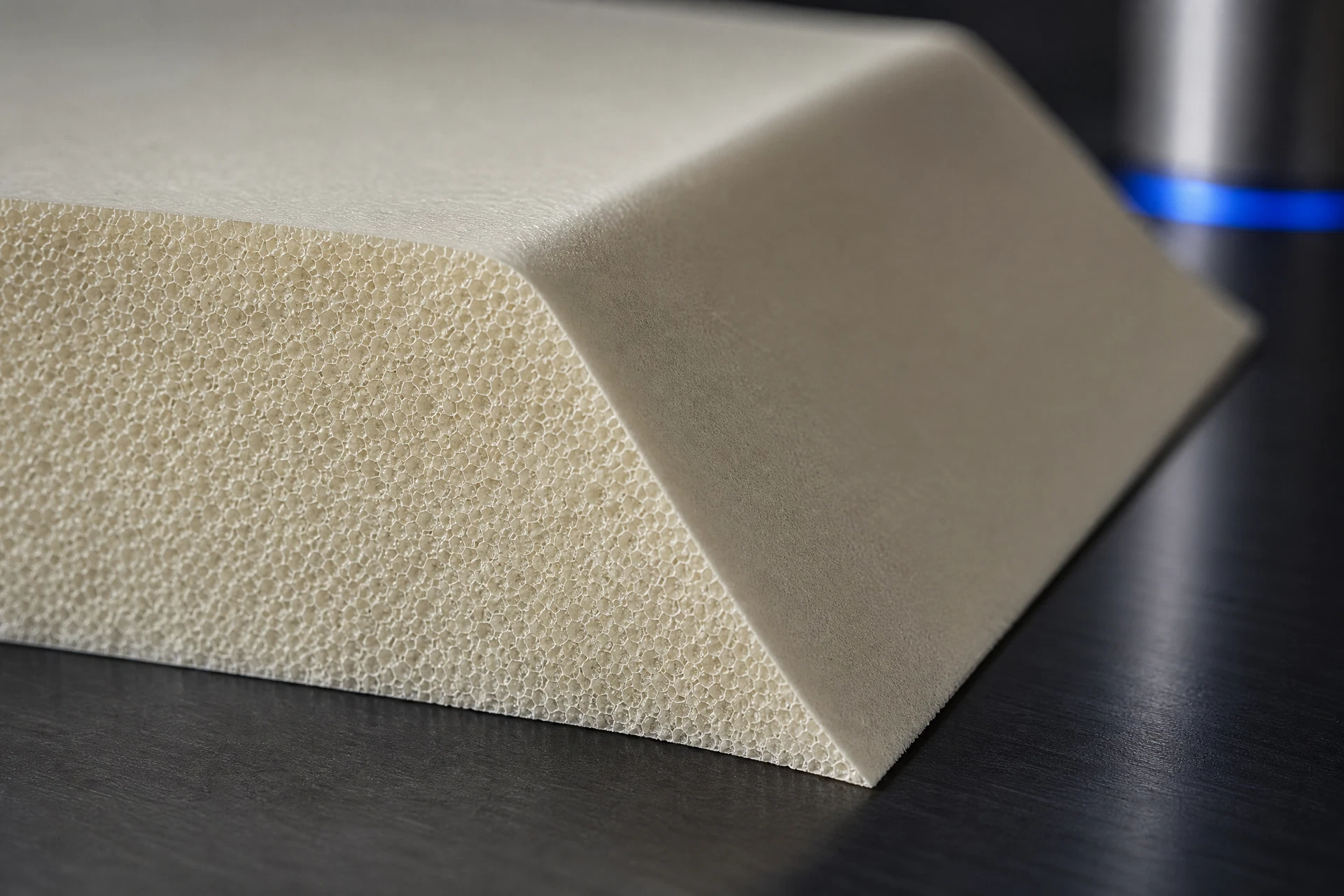
Material and component context
Processing and machinability discussion
Project-specific technical data
Related engineering pathways
Decision reference matrix
Decision framework
The right answer depends on the selected grade, structure, geometry, manufacturing method, and required documentation. This guide identifies the questions to resolve before a material or process is finalized.
Limitations and confirmation
PMI is not presented as universally superior to every alternative. Comparative or performance decisions should be made against project requirements and current, applicable technical datasheets. ROHACELL® is a third-party trademark.
Use density as a selection conversation, not a shortcut
Density can be an important initial parameter because it helps organize material options, but it cannot replace the full component discussion. The structural task, geometry, skin system, process route, thickness, and applicable data all influence whether a proposed density range is relevant to the final part.
Link density to the actual core form
A project may begin with a sheet, block, formed core, or CNC-machined geometry. The selected form affects how the material is prepared and how the density discussion connects to the component. A clear drawing and process description help keep the enquiry tied to a real engineering requirement.
Ask for the applicable technical datasheet
Mechanical properties, temperature context, cell structure, tolerances, and processing details should not be generalized from a density label. The appropriate technical datasheet must be requested and checked against the exact grade and project requirements before selection or release.
Use the density guide to prepare a better RFQ
State the density range if it is already known, but also include thickness, component or application, expected geometry, manufacturing process, CNC requirement, and files. This is more informative than a density-only request and gives the technical team the context needed to respond.
Related questions
Questions that make the next engineering conversation more useful.
01Can a website select the final PMI foam density?
No. The selector and guide can structure an early enquiry, but the final material selection must be confirmed against project requirements and the applicable technical datasheet.
02Why does thickness matter alongside density?
Thickness is part of the finished structural geometry and should be considered alongside the component, skin construction, core form, manufacturing process, and other project-specific requirements.
03How should pmi foam density selection guide be specified?
Start with the component, laminate concept, operating conditions, geometry, and manufacturing route. The applicable material grade and technical data should be confirmed against the specific project.
04Can a drawing be reviewed before a quotation?
Yes. STEP, STP, STL, DXF, DWG, PDF, and ZIP files can be submitted with an RFQ so the team can review the core form, machining scope, and information required for a project-specific response.