
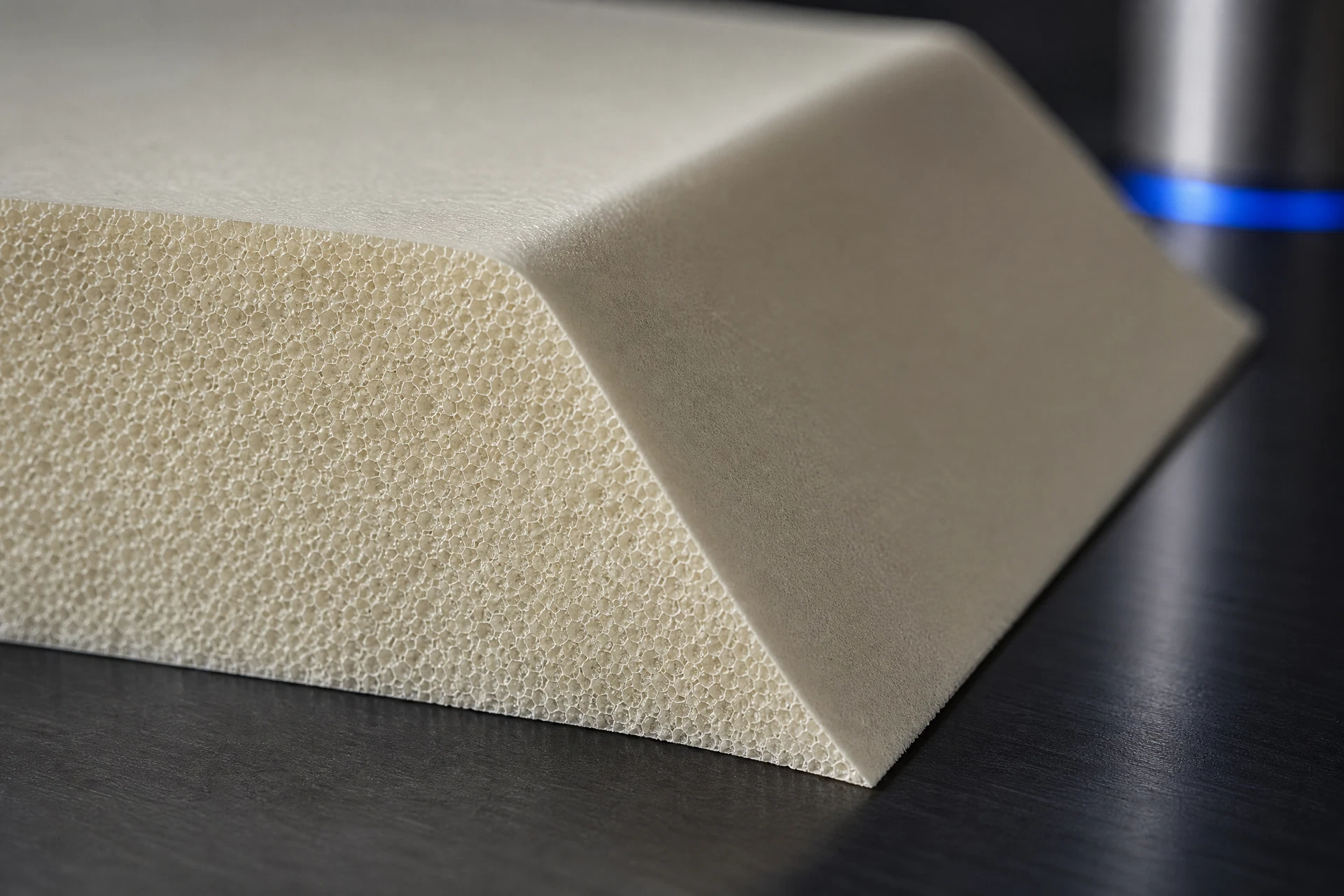
Component and geometry definition
Core form and process context
Applicable grade documentation
CAD and technical RFQ preparation
Decision reference matrix
Plan the core around the mould and finished geometry
A compression-molded core discussion should begin with the actual mould, component dimensions, laminate arrangement, core interfaces, and drawing-controlled features. The selected PMI grade and any process conditions must be reviewed through applicable documentation; this page does not state a universal temperature, pressure, interference, or forming capability.
Use a controlled project brief
Share the component application, drawing or model, proposed manufacturing route, material direction if known, and the technical information that needs confirmation. The response should remain tied to the actual project and its applicable documentation.
Related questions
Questions that make the next engineering conversation more useful.
01How should pmi foam compression molding planning be specified?
Start with the component, laminate concept, operating conditions, geometry, and manufacturing route. The applicable material grade and technical data should be confirmed against the specific project.
02Can a drawing be reviewed before a quotation?
Yes. STEP, STP, STL, DXF, DWG, PDF, and ZIP files can be submitted with an RFQ so the team can review the core form, machining scope, and information required for a project-specific response.