Industry and component challenge
PMI core form and material documentation
CNC geometry and composite process
Quality review and technical RFQ
Radome structure lens
Geometry, construction and verification belong in one brief.
Engineering record
Component context
Core & geometry
Process & review
Start with the technical requirement
The relevant structure, loading context, geometry, core thickness, skin construction, process route, and documentation needs should be established before selection. The page does not make unverified application-performance claims.
Keep technical values attached to the selected material
Properties, temperature context, RF characteristics, resin behaviour, and inspection needs depend on the actual grade and project. Request the applicable technical datasheet and project review.
What a radome core discussion needs to establish
A radome is an enclosure or structural cover that protects an antenna or related system while being part of a larger functional design. A PMI foam discussion for this context starts with the actual structure, component geometry, face-sheet concept, adhesive or resin interfaces, applicable documentation and verification requirements. It should not infer RF transmission, dielectric behaviour or environmental performance from a general material-family statement.
Treat the radome as a sandwich construction
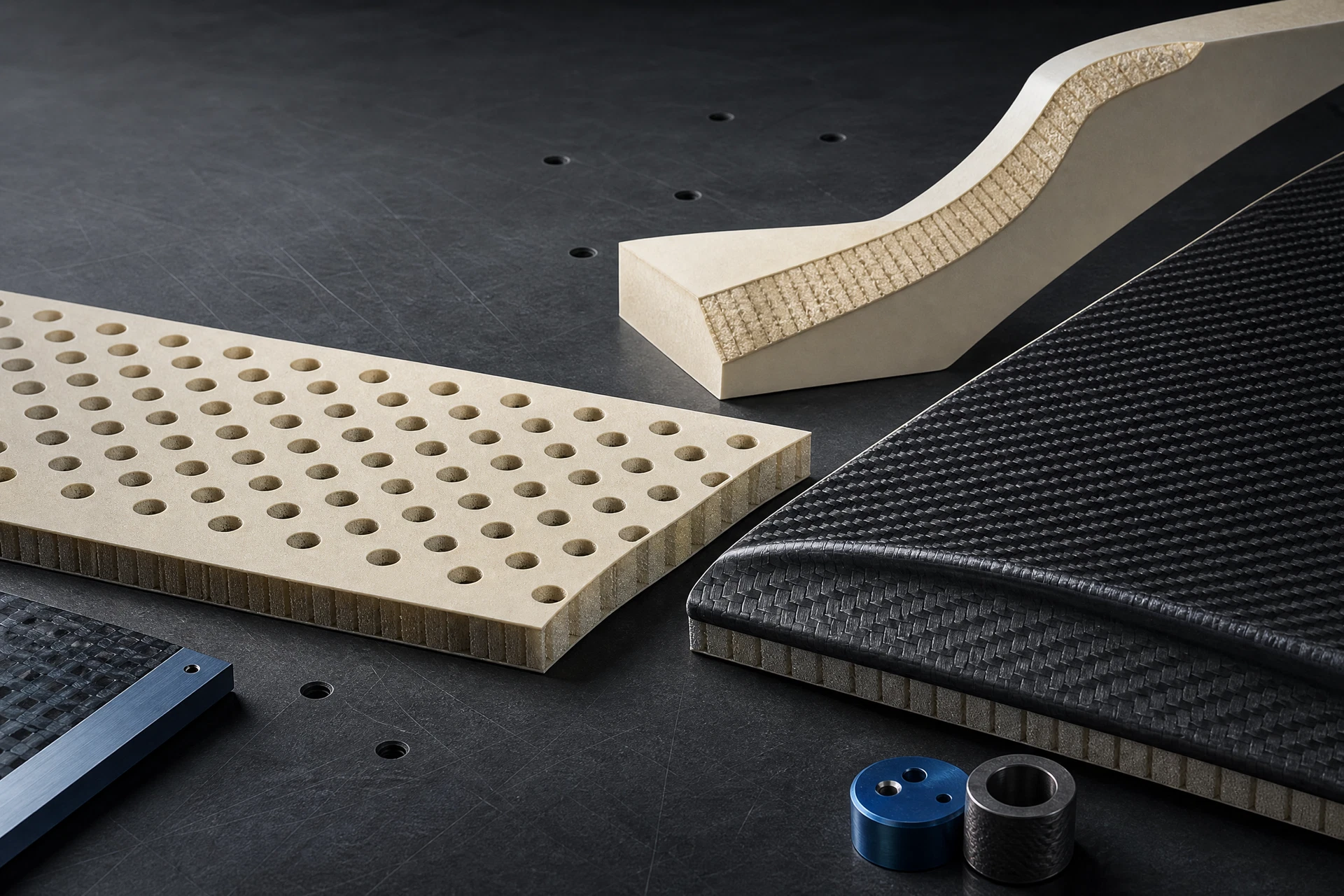
The practical review considers the relationship between face sheets, core, interfaces, curvature and any edge or attachment details. The core can influence the geometry and manufacturing path of the structure, while material properties and RF-relevant values must be confirmed only from the proposed grade data and programme requirements.
Geometry, curvature and core preparation are linked
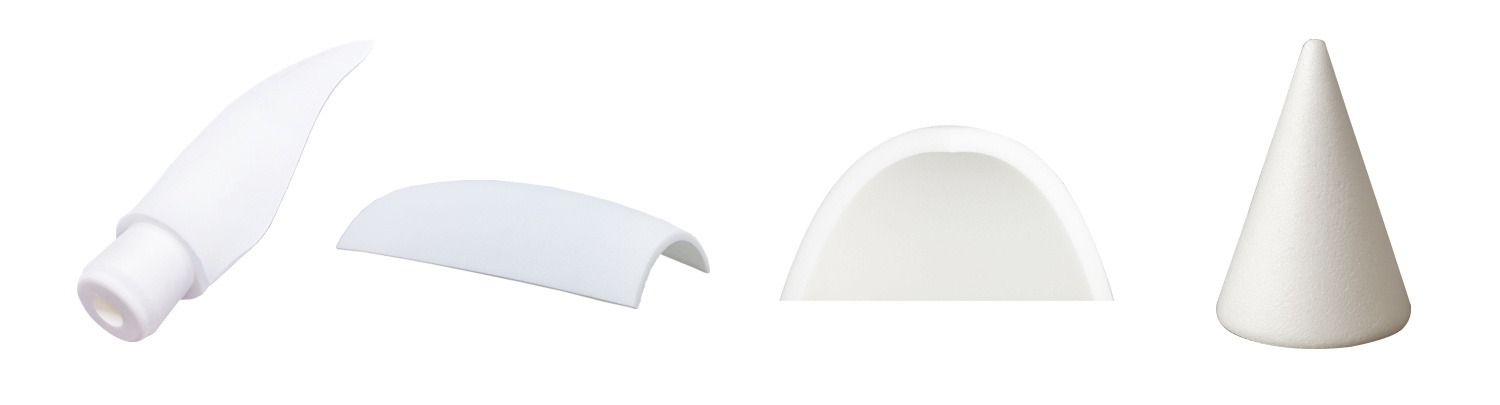
Radome and antenna structures may involve curved or double-curved surfaces, transitions, local features or controlled interfaces. CAD review makes it possible to describe the component form, discuss whether a sheet, formed core or CNC-machined geometry is relevant, and connect core preparation to the laminate, mould or assembly route.
Separate RF requirements from generic material claims
Terms such as dielectric properties, loss tangent, resin uptake and RF transmission require verified, grade-specific information and programme-level validation. This page makes those requirements visible in the project brief rather than substituting broad web claims for technical evidence. Numerical RF data should be requested through the applicable documentation path.
Document manufacturing and quality considerations
The intended process, surface and geometry references, material documentation, inspection questions, feature protection and packing requirements should be captured before a core path is finalized. This creates a controlled handoff between material review, machining or forming, composite manufacturing and the programme’s own validation process.
Build a useful radome or antenna RFQ
Share the component use, CAD or drawing, sandwich or face-sheet context where available, curvature, target core geometry, manufacturing route, RF or environmental documentation questions, quantity context and the specific review needed. This gives the engineering conversation a clear boundary without assuming hidden system requirements.
Radome and antenna application: keep functional requirements documented
A radome or antenna foam-core enquiry needs programme-specific information about the component, geometry, laminate construction, material documentation, manufacturing route, and verification requirements. The page establishes an evidence boundary for the project; it does not infer dielectric, environmental, or system performance without applicable grade data and review.
Related questions
Questions that make the next engineering conversation more useful.
01What is a radome?
A radome is a protective enclosure or structural cover associated with antenna or related systems. The relevant core discussion depends on the actual geometry, construction and programme validation requirements.
02Why can foam core be considered in a radome sandwich structure?
A foam core may be considered as part of the sandwich construction and geometry path. The selected material, construction and functional suitability must be verified for the actual programme.
03Can PMI foam be used for curved radome geometry?
Curved or double-curved geometry should be assessed from the component CAD, material documentation, core form and manufacturing route. A page cannot establish universal forming capability.
04Does this page provide dielectric values?
No. Dielectric and RF-relevant numerical data must be verified against the applicable grade documentation and the programme’s own validation requirements.
05How does resin uptake affect a radome material review?
Resin and laminate effects are project-specific and should be reviewed with the selected grade documentation, construction and process route instead of being inferred from a generic page.
06Can radome core geometry be CNC machined?
CAD-led core preparation can be reviewed where the structure needs defined contours, interfaces or local features. The applicable machining scope follows the real drawing and process.
07What quality information should a radome RFQ include?
Include drawing revision, geometry references, surfaces or interfaces that matter, material documentation needs, manufacturing route and programme-specific validation questions.
08How should antenna structure projects request technical support?
Use the RFQ to share the component, available CAD, construction context, known geometry and the RF, process or material information that needs a documented review.
09How should pmi foam for radome structures be specified?
Start with the component, laminate concept, operating conditions, geometry, and manufacturing route. The applicable material grade and technical data should be confirmed against the specific project.
10Can a drawing be reviewed before a quotation?
Yes. STEP, STP, STL, DXF, DWG, PDF, and ZIP files can be submitted with an RFQ so the team can review the core form, machining scope, and information required for a project-specific response.