
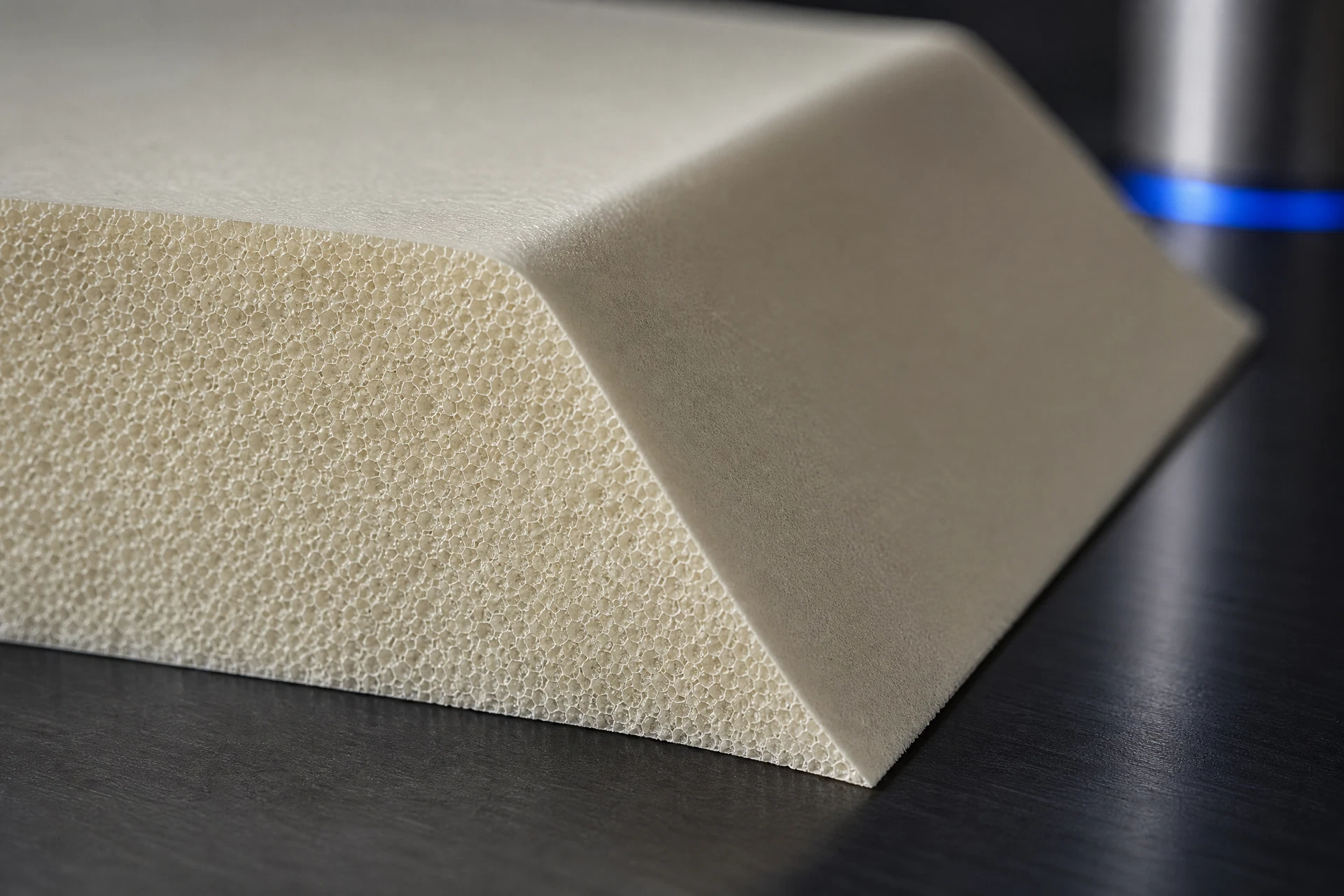
Material form and grade documentation
Geometry and composite process
Machining and handling context
Verified project selection criteria
Engineering record
Component context
Core & geometry
Process & review
Use a comparison matrix that follows the component
A meaningful material comparison links the core form, sandwich structure, part geometry, manufacturing route, available technical documentation, and project constraints. It does not reduce selection to a slogan, a generic density statement, or a single property that may not apply to the grades under review.
Keep third-party products and data claims objective
Third-party trademarks are used only to describe customer search intent. Final comparisons must use current grade-specific documentation, verified project requirements, and the actual component context. No affiliation, equivalence, replacement, or superiority is implied by this comparison centre.
Related questions
Questions that make the next engineering conversation more useful.
01How should material comparison centre be specified?
Start with the component, laminate concept, operating conditions, geometry, and manufacturing route. The applicable material grade and technical data should be confirmed against the specific project.
02Can a drawing be reviewed before a quotation?
Yes. STEP, STP, STL, DXF, DWG, PDF, and ZIP files can be submitted with an RFQ so the team can review the core form, machining scope, and information required for a project-specific response.