
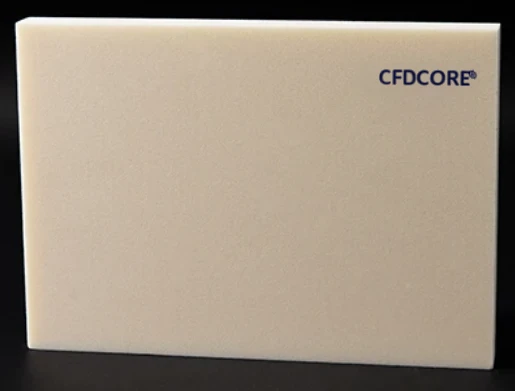
F-30 to F-110 documented entries
190°C heat-deflection reference context
Temperature, geometry and load path
Process-specific validation request
F Series / user-provided reference document typical values
Typical entries, with the source boundary intact.
| Grade | Density kg/m³ | Comp. MPa | Comp. mod. MPa | Tensile MPa | Tensile mod. MPa | Shear MPa | Shear mod. MPa | HDT °C | Pore mm | Ref. stock size mm |
|---|---|---|---|---|---|---|---|---|---|---|
| F-30 | 30 | 0.4 | 20 | 0.9 | 37 | 0.4 | 11 | 190 | <0.1 | ≥2500×1200×100 |
| F-35 | 35 | 0.45 | 30 | 1.2 | 45 | 0.6 | 14 | 190 | <0.1 | ≥2500×1200×90 |
| F-40 | 40 | 0.65 | 40 | 1.5 | 56 | 0.7 | 18 | 190 | <0.1 | ≥2500×1200×90 |
| F-52 | 52 | 0.9 | 52 | 1.9 | 70 | 0.83 | 25 | 190 | <0.1 | ≥2500×1200×90 |
| F-75 | 75 | 1.7 | 80 | 2.9 | 105 | 1.4 | 34 | 190 | <0.1 | ≥800×1200×80 |
| F-110 | 110 | 3.0 | 140 | 4.2 | 180 | 2.4 | 70 | 190 | <0.1 | ≥800×1200×75 |
Reference document heat deflection temperature: 190°C. This is a documented typical value, not a continuous-use guarantee or cure-cycle approval. Preserve the named grade, source document and test basis when requesting confirmation; do not treat this table as a supply guarantee, final part result or design release.
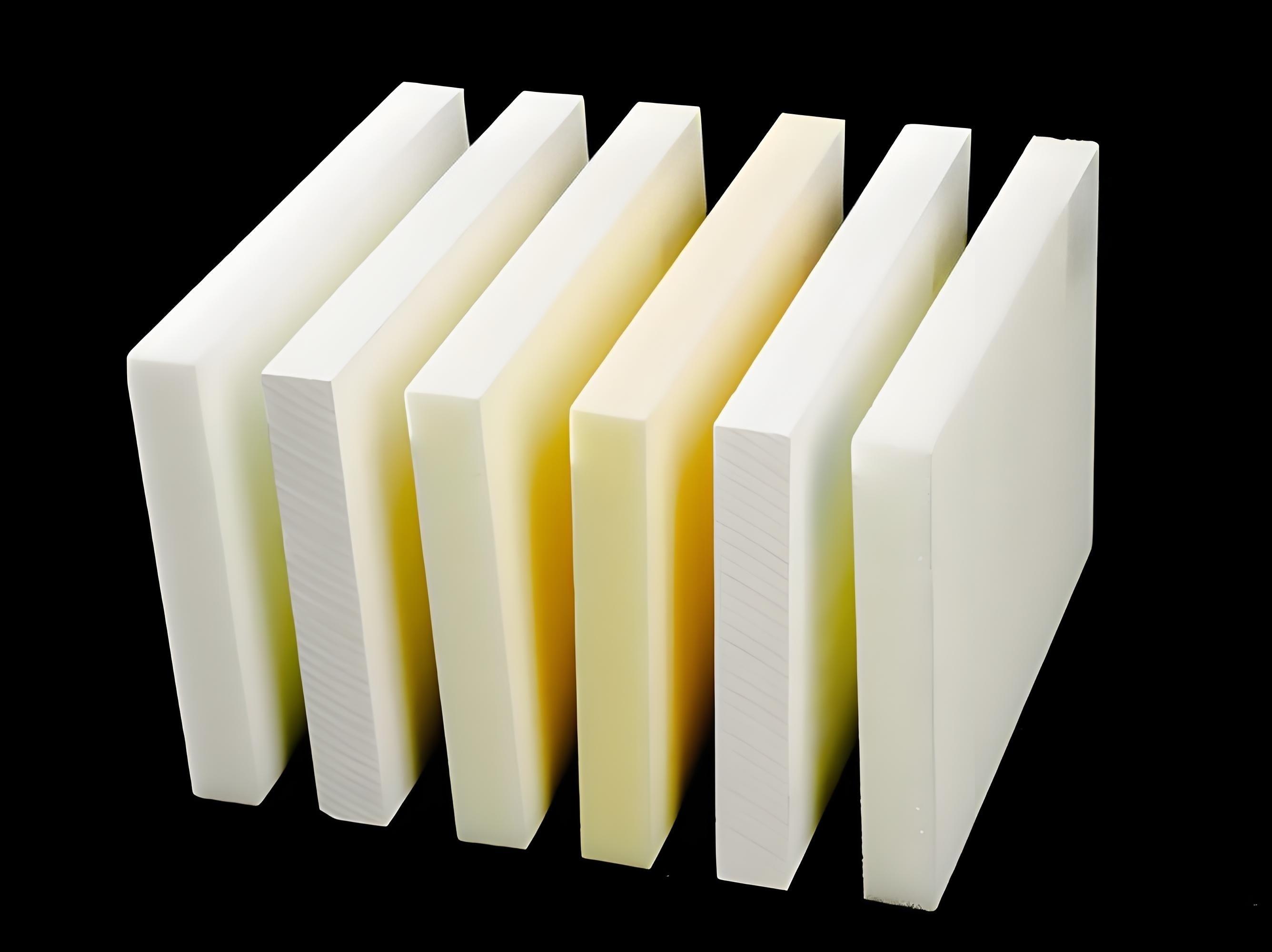
Treat the 190°C entry as a reference point—not a process approval
The F Series table reports 190°C as a heat-deflection-temperature reference. A finished core can experience temperature with time, pressure, support condition, facesheets, bond lines and geometry that differ from a reference test. The entry should therefore initiate a thermal review rather than approve a cure cycle or service condition.
Pair F Series data with the actual component geometry
Core thickness, unsupported spans, radii, inserts, skins and interfaces can change what needs to be evaluated in a heated structure. Submit the component envelope, thermal profile, load context and process route so the correct grade documentation and validation questions can be identified.
Document the process before releasing a material route
An effective RFQ states the candidate F Series grade, desired form, nominal dimensions, temperature/time profile, tool or laminate context, CNC requirements and requested documentation. Typical values remain reference data until the applicable material and process requirements are confirmed.
Related questions
Questions that make the next engineering conversation more useful.
01Does the F Series 190°C reference approve continuous use at 190°C?
No. The reference document presents a typical heat-deflection value, not a continuous-use warranty, cure-cycle approval or finished-component certification.
02What should I include in an F Series high-temperature enquiry?
Include the candidate grade, component drawing, thickness, process temperature and time, pressure or vacuum context, construction details and the evidence required for the project.