
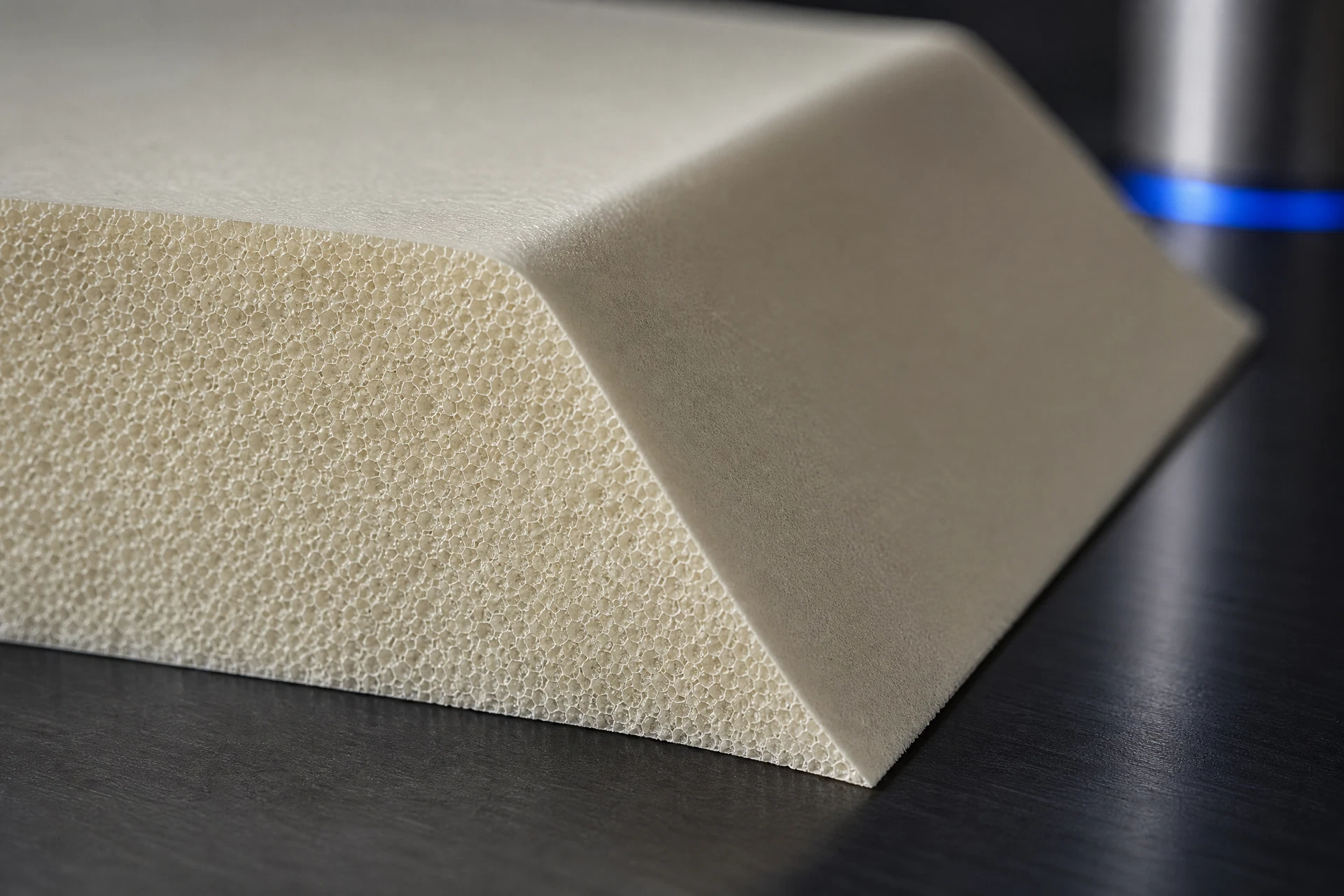
Density range and named grade
Mechanical and thermal data context
Thickness and sandwich geometry
Applicable datasheet before release
Engineering record
Component context
Core & geometry
Process & review
Use density to organize the question, not to end it
Density can narrow an early material discussion, but a density label does not define a complete core selection. The supplied TDS lists different named grades and families with their own typical properties. The structural role of the core, sandwich thickness, temperature context, process and geometry determine which grade documentation needs to be checked next.
Compare values only with their test context
Compression, tensile, shear and elevated-temperature fields must be read with the grade, test method, sample condition and source boundary visible. Do not average values from multiple documents or treat a sample report as a guaranteed range. The correct action is to request the applicable current datasheet for the proposed grade.
Make density part of a better RFQ
State the density direction if it is known, then add core form, thickness, CAD or dimensions, laminate or process route, temperature context and the material question that requires confirmation. This turns a density-only search into an engineering brief that can support a meaningful review.
Related questions
Questions that make the next engineering conversation more useful.
01Can a website select PMI foam density for my final part?
No. It can organize the decision, but final selection must be confirmed with the applicable datasheet and project requirements.
02Why is thickness needed with density?
Thickness is part of the sandwich geometry and affects how the core relates to skins, contour, interfaces and the finished component.