
Specific engineering search intent
Drawing and geometry context
Process and handoff review
Controlled technical evidence
Engineering record
Component context
Core & geometry
Process & review

Define the engineering decision
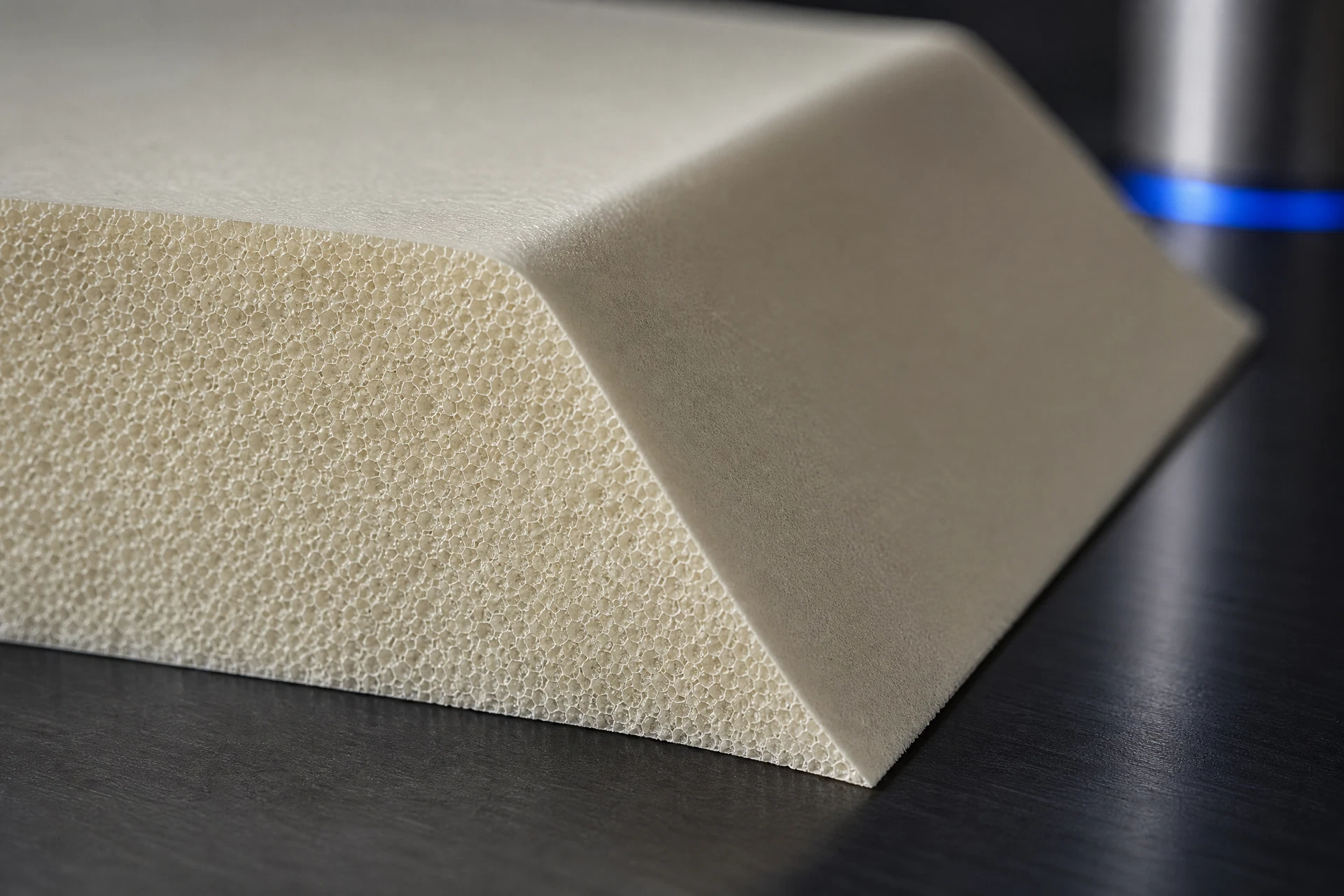
The engineering decision is whether a PMI core format and grade can support the defined structural concept within the proposed fabrication route. Review the required shape, cut or machined features, bonding interfaces, curvature, edge treatment, and exposure conditions as a connected set of design inputs. Request the applicable grade documentation for the intended use, then compare it with laminate design assumptions and process constraints. Any selection should remain provisional until representative parts, coupons, or other agreed verification activities address the project’s critical failure modes.
Translate the part into a controlled geometry brief
Geometry should be communicated through current drawings, models, sections, and interface definitions. Identify nominal core regions, contours, transitions, local reinforcements, edge closures, inserts, holes, steps, and bondline boundaries without assuming standard dimensions or fixed tolerances. Note datum strategy, machining directions, surface preparation, ply drops, and areas requiring controlled fit. A useful drawing package separates design intent from manufacturing allowances and identifies inspection points. Core geometry can then be reviewed against the laminate stack, tooling concept, assembly sequence, and access needed for fabrication and inspection.
Connect the material question to the process route
Process and handoff begin with a structured exchange of design and manufacturing information. Provide the application description, laminate schedule, tooling approach, forming or machining sequence, bonding method, cure conditions, joining details, and relevant handling limits. The supplier or materials team can map these inputs to a proposed product form and applicable grade data for review. Before release, align drawing revisions, material identification, inspection records, trial-build responsibilities, and change-control expectations. The handoff should clearly distinguish preliminary guidance from requirements confirmed by project testing and engineering approval.
Keep technical evidence within its stated boundary
Evidence should be requested against the specific grade, form, orientation, processing route, and intended application. The review package may include technical data sheets, material traceability information, processing guidance, test methods, sample conditioning, and any limitations or exclusions stated by the source. Do not treat generic data as proof of part-level suitability. Define a validation matrix covering material behavior, bonded or laminated construction, geometry-sensitive regions, process repeatability, and inspection criteria. Project acceptance should follow documented engineering review and agreed verification results.
Related questions
Questions that make the next engineering conversation more useful.
01How should engineers begin selecting a PMI structural foam core?
Start with the structural concept and manufacturing route: define laminate interfaces, geometry, contours, joining details, process conditions, and inspection needs. Then request applicable grade and form data, identify uncertainties, and confirm suitability through project-specific analysis and agreed validation rather than relying on a generic product description.
02What information should be included in a PMI foam core inquiry?
Include drawings or models, sections, target core regions, laminate and bond details, tooling and process assumptions, machining or forming requirements, inserts and openings, inspection expectations, and the intended validation plan. This information enables a focused review of product form, grade evidence, manufacturing fit, and remaining technical risks.