
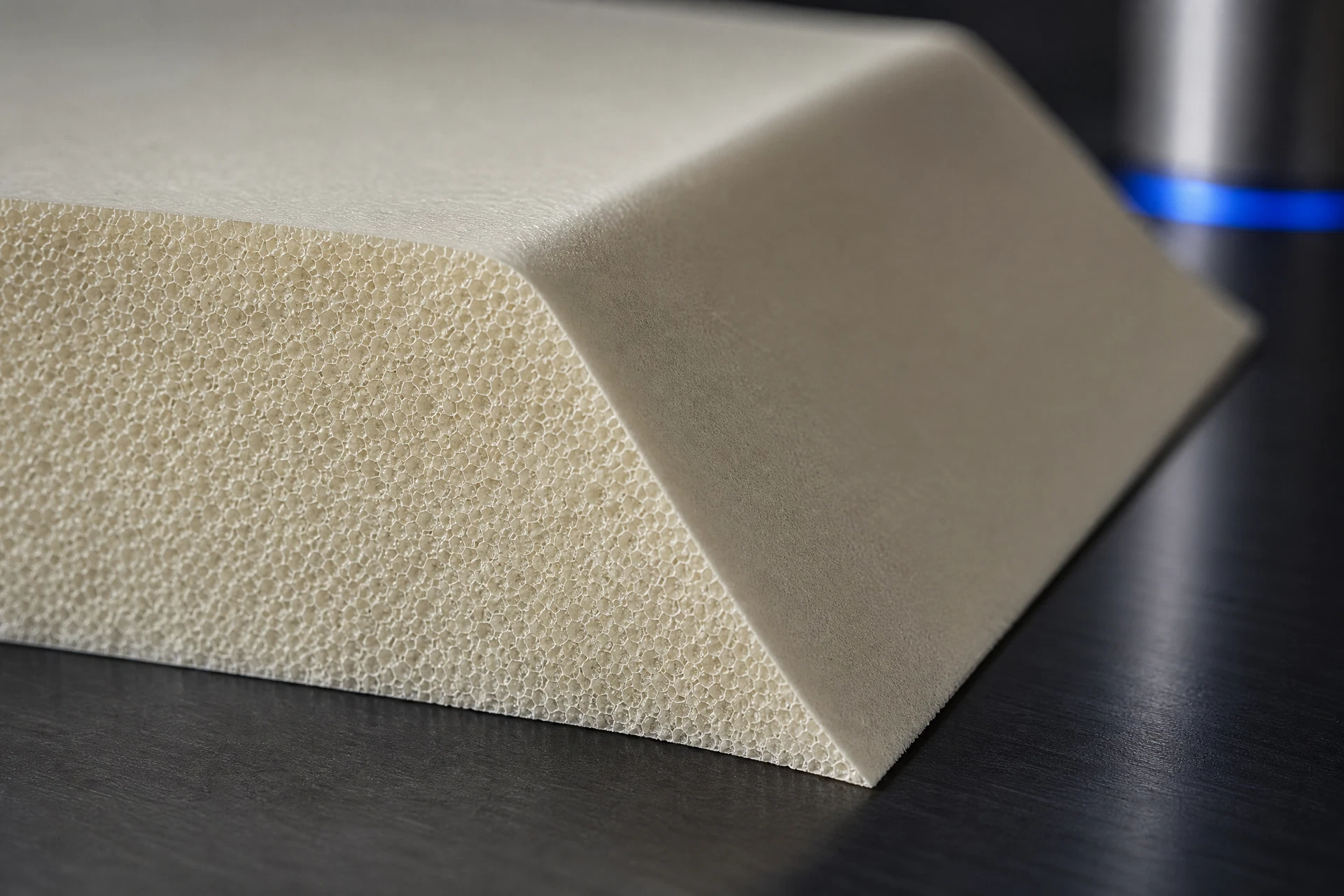
Specific engineering search intent
Drawing and geometry context
Process and handoff review
Controlled technical evidence
Engineering record
Component context
Core & geometry
Process & review
Define the engineering decision
Selecting a PMI composite core requires a documented comparison between the structural concept and the available grade information. Review load paths, support conditions, panel or sandwich construction, joining details, cutouts, inserts, curvature, and the proposed manufacturing sequence before making a material decision. Separate confirmed supplier data from assumptions that require testing or analysis. A project review should define acceptance criteria, interfaces, processing limits, and open questions, rather than relying on generic suitability language or unsupported performance conclusions.
Translate the part into a controlled geometry brief
Geometry review should use the current engineering drawing or a controlled model wherever possible. Identify core boundaries, thickness transitions, radii, tapers, holes, edge closures, inserts, bondlines, ply interfaces, and regions requiring machining or local reinforcement. Note datum schemes, orientation, surface preparation zones, and any features that may affect forming, bonding, inspection, or handling. If dimensions, tolerances, or material conditions are not yet fixed, label them as design inputs to be confirmed during technical review instead of presenting provisional values as product limits.
Connect the material question to the process route
A practical handoff connects design intent to fabrication planning. Share the drawing package, material schedule, facing and adhesive assumptions, process route, required forms, and inspection expectations for review. CoreMatrix Materials can help organize questions about cutting, shaping, bonding, inserts, repairs, and traceability, while the project team retains responsibility for final design authority and process qualification. The handoff should record revisions, unresolved interfaces, requested samples or coupons, and the evidence needed before production approval.
Keep technical evidence within its stated boundary
Evidence should be requested against the actual project definition. Identify the applicable PMI grade, form, conditioning state, facing or adhesive system, test method, and revision of each referenced data source. Distinguish supplier documentation from project-generated analysis, coupon testing, process trials, and inspection records. Do not infer certification, environmental, chemical, RF, or performance suitability without supporting documentation. Validation boundaries should state what has been demonstrated, what remains to be tested, and who approves the final engineering basis.
Related questions
Questions that make the next engineering conversation more useful.
01What information is needed to plan a PMI composite core solution?
Start with the controlled drawing or model, core geometry, facing materials, bonding and fabrication assumptions, service conditions, inspection needs, and intended use. A technical review can then identify the relevant grade data, unresolved interfaces, process questions, and project-specific tests required before approval.
02Can a PMI composite core be approved from a generic datasheet alone?
No. A datasheet may support initial screening, but approval should consider the exact grade, geometry, interfaces, processing route, and acceptance criteria. Project analysis, representative coupons, process trials, or other documented validation may be required to confirm the engineering basis.