
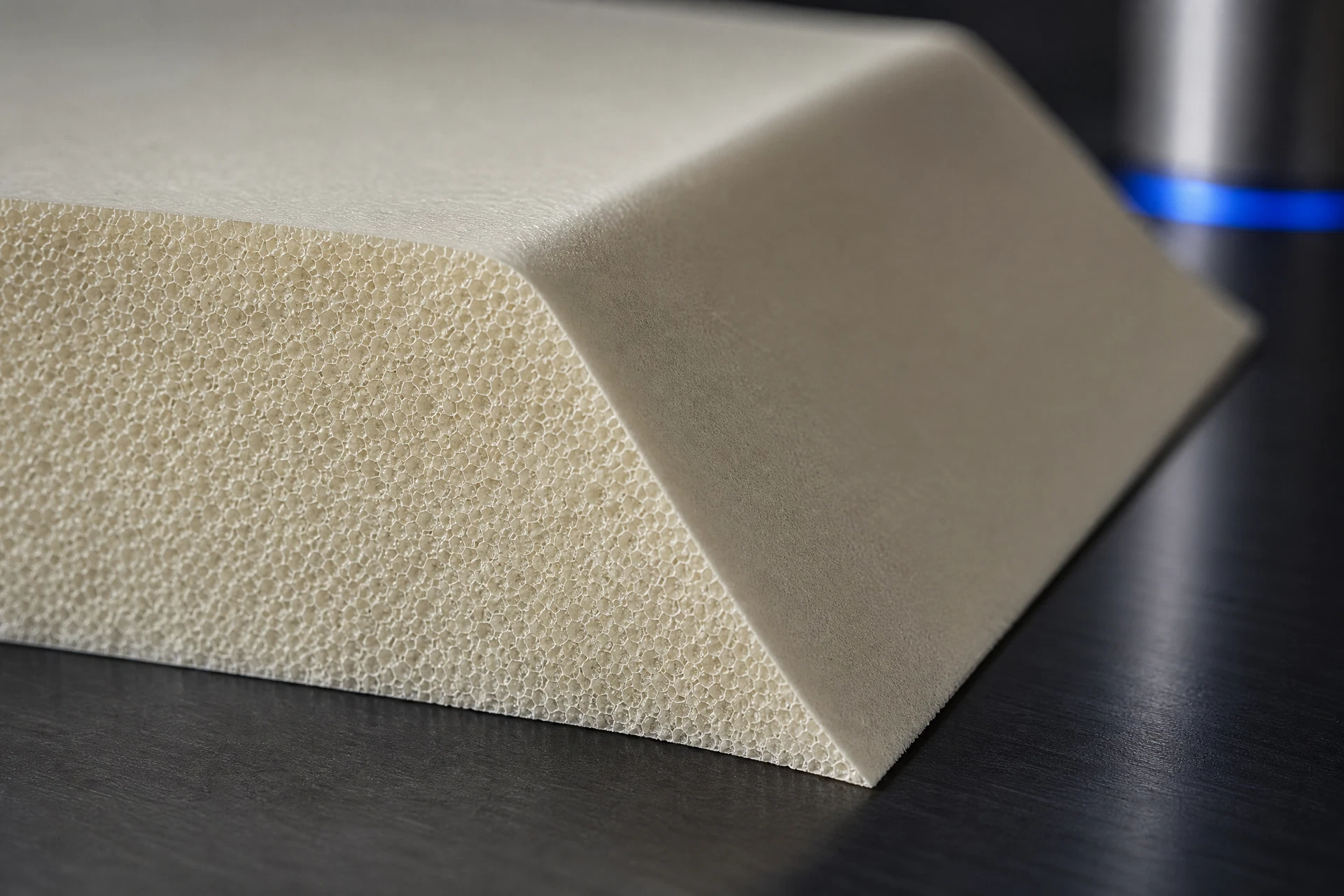
Specific engineering search intent
Drawing and geometry context
Process and handoff review
Controlled technical evidence
Engineering record
Component context
Core & geometry
Process & review
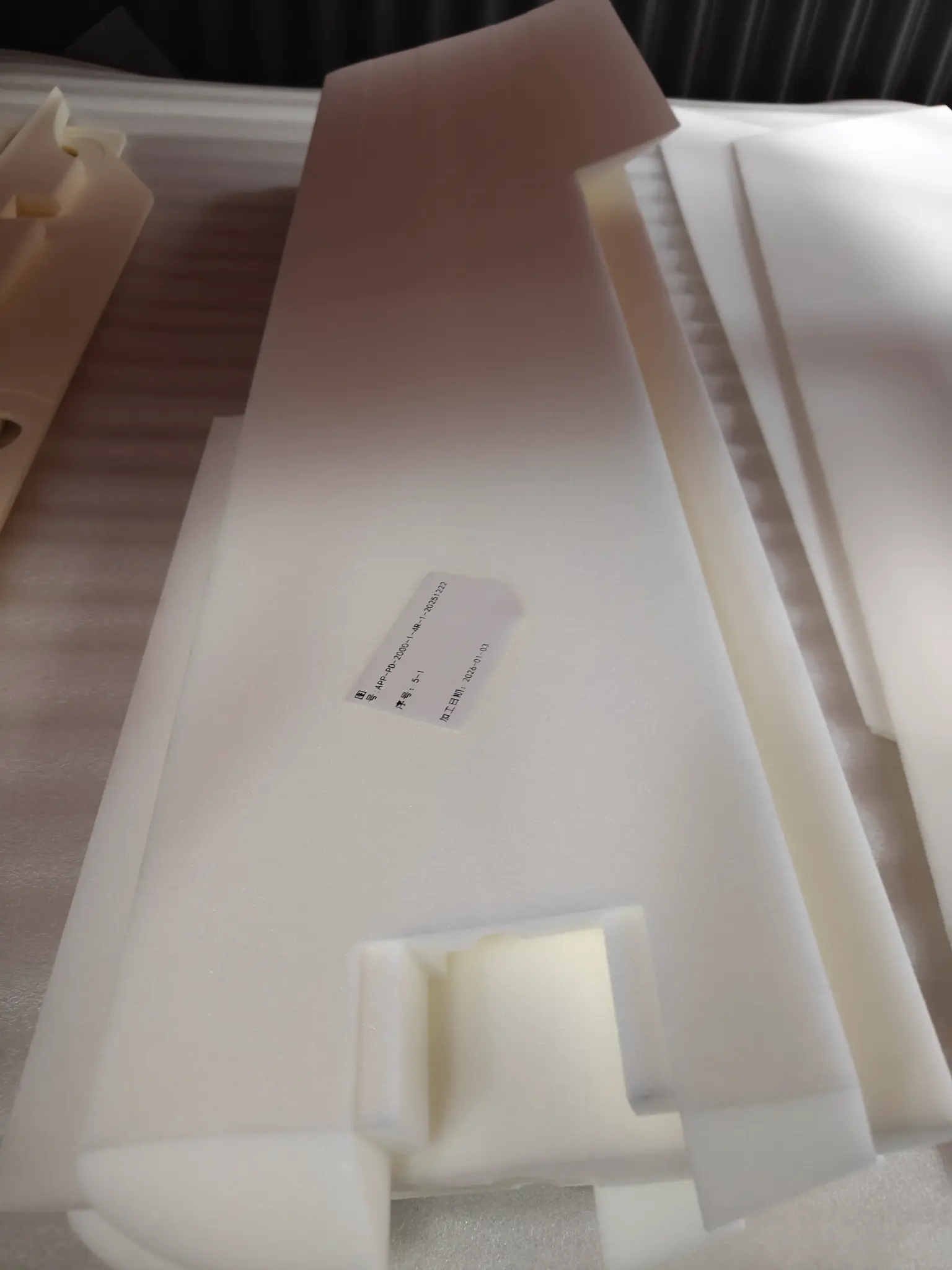
Define the engineering decision
An engineering decision should connect the foam grade to the actual design and process context. Review the required stiffness, strength, toughness, thermal exposure, moisture conditions, bonding system, machining approach, and inspection plan against current supplier documentation. Treat published data as grade- and test-method-specific, and avoid transferring values between densities, formats, or constructions without review. Final suitability should remain a project decision supported by representative samples, drawings, process trials, and agreed acceptance criteria.
Translate the part into a controlled geometry brief
Geometry review should define the core envelope and its relationship to the complete assembly. Provide a drawing or model showing panel boundaries, radii, tapers, steps, cut-outs, inserts, joints, bondlines, ply transitions, and any areas requiring local shaping or reinforcement. Identify datum schemes, orientation, surface preparation zones, and inspection access. Do not assume standard dimensions, thicknesses, or tolerances; confirm what can be supplied or processed for the specific design, then capture approved geometry in the controlled drawing package.
Connect the material question to the process route
A practical handoff links material selection to manufacturing execution. Share the design intent, laminate schedule, adhesive or resin system, forming conditions, machining features, assembly sequence, and inspection points for review. The project team should agree which operations are performed by the material supplier, fabricator, or final assembler, and how revisions are controlled. Early feasibility work may include sample cutting, bonding checks, forming trials, and representative assembly review, with results recorded against the drawing and process specification.
Keep technical evidence within its stated boundary
Evidence should be requested for the exact candidate grade and intended construction. Depending on the project, this may include technical data sheets, test-method references, conditioning details, processing guidance, safety documentation, sample traceability, and records from agreed validation trials. These documents establish an information boundary; they do not replace design analysis, supplier review, or qualification. CoreMatrix Materials can help define an evidence request and identify where project-specific testing or inspection is needed before release.
Related questions
Questions that make the next engineering conversation more useful.
01How should engineers evaluate closed cell PMI foam for a new composite design?
Start with the load path, sandwich construction, environment, bonding system, and manufacturing route. Compare the candidate grade’s documented data and processing guidance with the drawing and project requirements, then confirm suitability through representative samples, process trials, and agreed validation criteria.
02What information should be included in a PMI foam inquiry?
Include the controlled drawing or model, core geometry, laminate and adhesive details, forming or machining requirements, environmental conditions, inspection expectations, and intended application. Also state which material records, samples, or project-specific tests are needed for technical review and approval.