Specific engineering search intent
Component, geometry, and process context
Controlled material and test-data reading
Project-specific technical review
Engineering record
Component context
Core & geometry
Process & review

Start with the engineering decision
Keep the grade name, units and source-document boundary attached to every R Series entry. The table can help organize a preliminary material discussion, but a higher grade number is not automatic approval for a load case, cure route or component. Final selection requires the actual core form, geometry, construction and applicable technical confirmation.
Translate the component into a controlled core brief
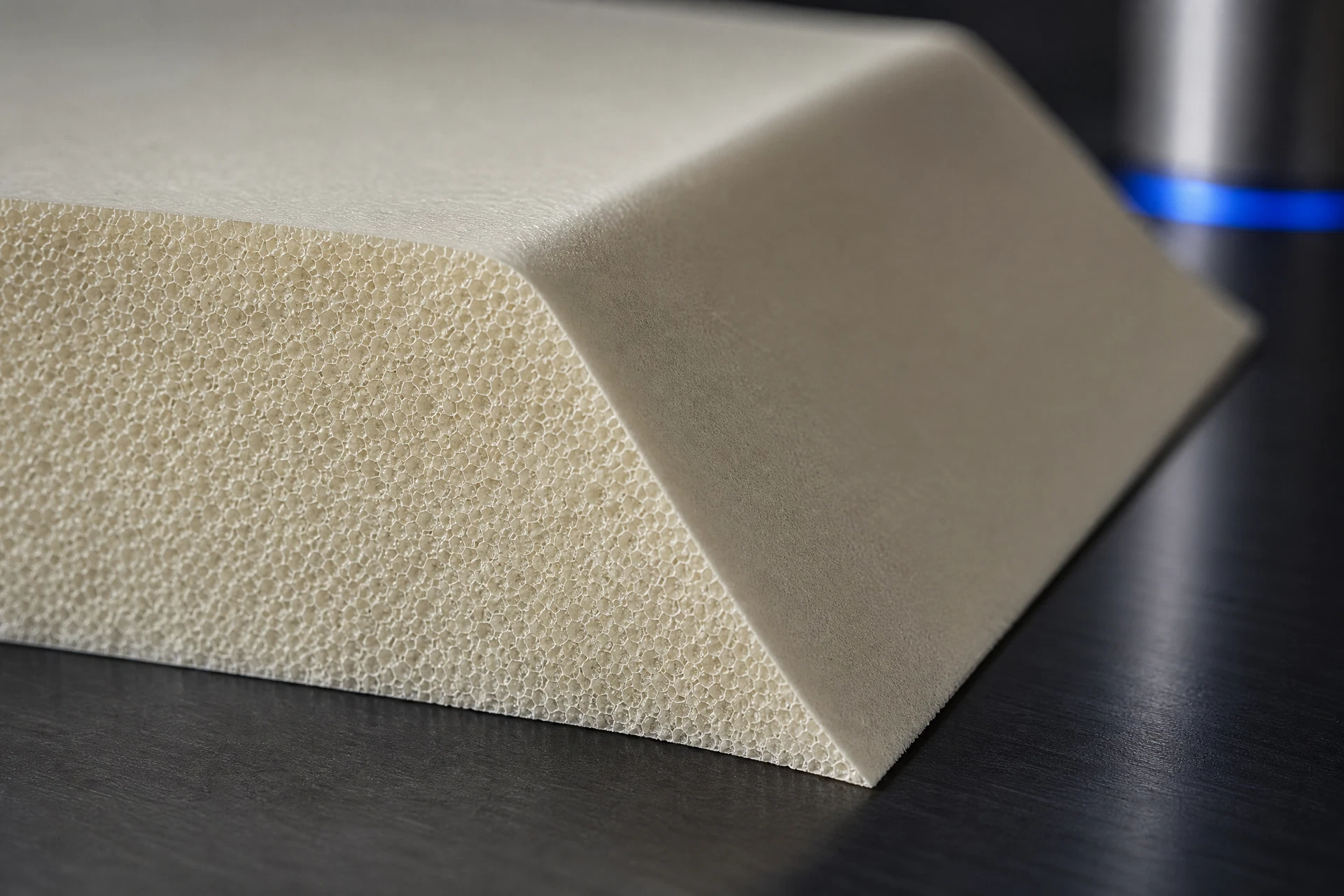
An R Series request becomes useful when it identifies whether the core is a flat panel, machined block, curved shell or detailed sandwich part. Thickness, cut-outs, local interfaces, skins and bonded areas should be stated with the grade so the material discussion remains connected to the finished component.
Connect the material question to the process route
Include the R Series grade, starting form, finished dimensions, CAD or drawing, quantity, process context and the documentation requested. Machining, bonding and inspection are evaluated for the real part; they should not be inferred from a series label or a typical table value.
Keep technical evidence within its stated boundary
R Series figures shown here are user-provided reference-document typical values. They are not certified results, minimum values, design allowables, programme qualifications or commitments for every lot. Request the current applicable document and project-specific evidence before release.
Related questions
Questions that make the next engineering conversation more useful.
01Are R-52, R-75 and R-110 values guaranteed supply properties?
No. They are typical reference values in the user-provided document. Confirm grade, form, test basis and project acceptance criteria for the actual order.
02Can I use R Series values directly in a structural calculation?
Not as design allowables. Use them for preliminary screening, then obtain project-appropriate evidence and validation for the real construction and conditions.