
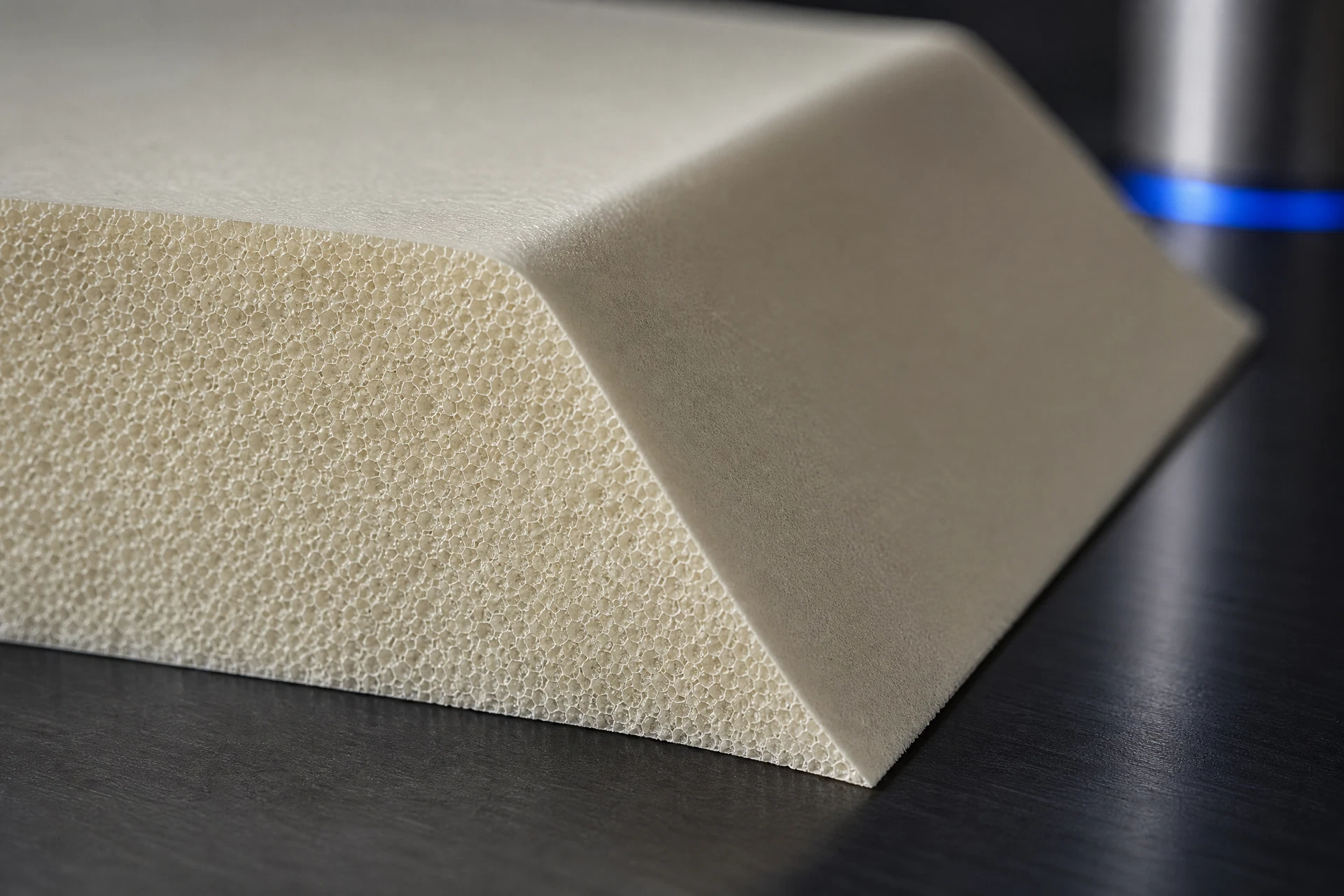
Specific engineering search intent
Component, geometry, and process context
Controlled material and test-data reading
Project-specific technical review
Engineering record
Component context
Core & geometry
Process & review
Start with the engineering decision
Use R/F/X typical values for preliminary comparison only. Then identify the sandwich construction, candidate core form, thickness, skins, bond or resin route and the performance question requiring evidence. The selected series does not independently define the entire panel.
Translate the component into a controlled core brief
Core thickness, panel span, local contours, joints, inserts, openings and edge treatments belong in the core brief. They affect how the core relates to facesheets and interfaces, and they cannot be resolved by a density or modulus field alone.
Connect the material question to the process route
Describe the laminate, bonding, cure or assembly context, drawing-controlled features, inspection approach and post-process handoff. The reference document guides the data request; final suitability requires project-specific material and construction review.
Keep technical evidence within its stated boundary
R/F/X figures are user-provided reference-document typical values. They are not finished-sandwich guarantees, design allowables or evidence of a named programme. Confirm applicable documents and validation criteria before release.
Related questions
Questions that make the next engineering conversation more useful.
01Does a PMI foam table define a complete sandwich panel?
No. The core is one element. Facesheets, interfaces, geometry, process and validation must be considered together.
02What should a sandwich-core data request include?
Include core series, thickness, skins, interfaces, component drawing, process context and the technical evidence needed.