Specific engineering search intent
Component, geometry, and process context
Controlled material and test-data reading
Project-specific technical review
Engineering record
Component context
Core & geometry
Process & review
Start with the engineering decision
State the component type, material direction if known, target core thickness, core form, laminate construction and the technical question that needs resolution. A foam grade cannot be selected responsibly from the name of an infusion process alone; the applicable datasheet and the actual build requirements must be brought together.
Translate the component into a controlled core brief
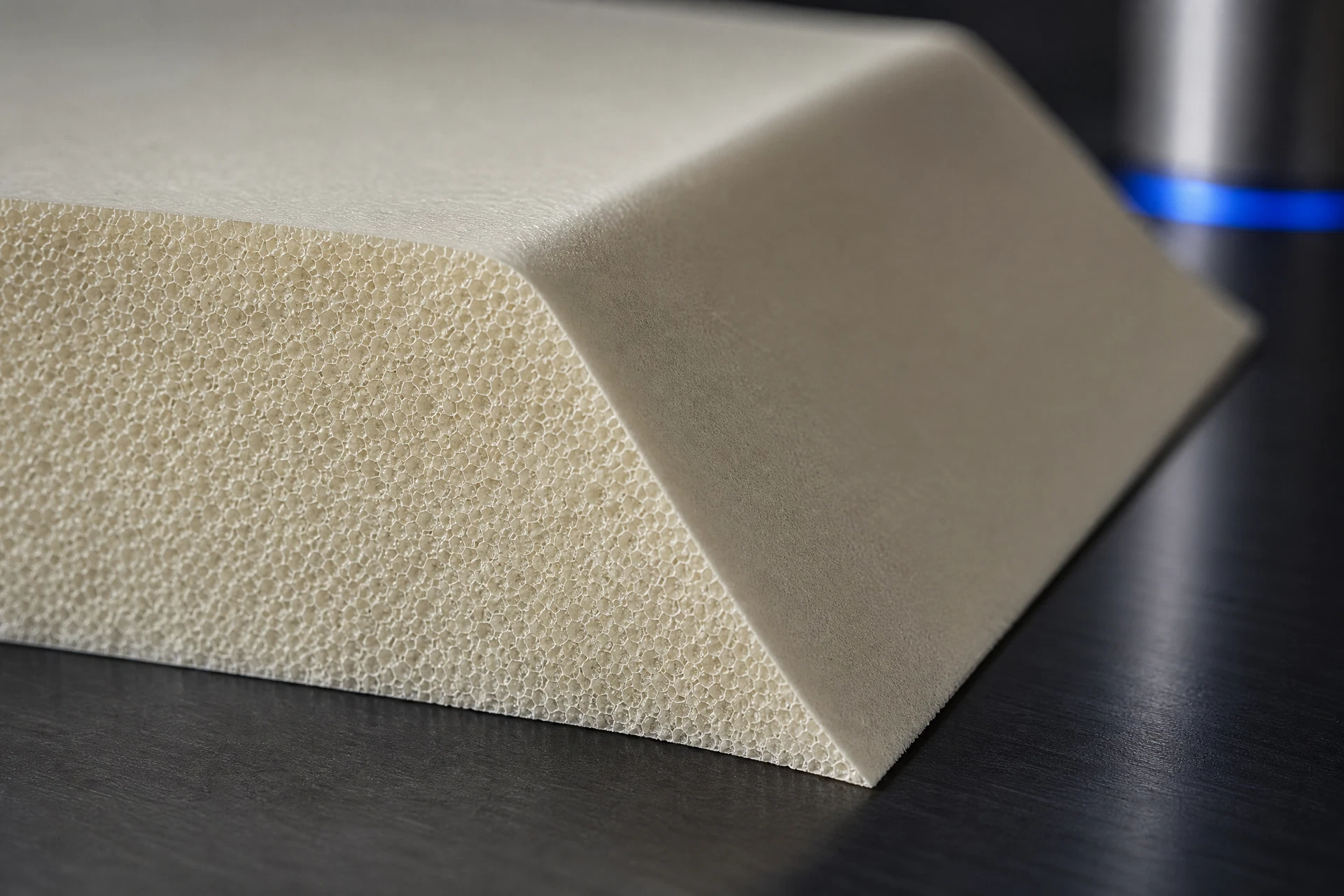
Describe whether the core is a flat panel, a shaped profile, a thick block, a patterned surface or a CNC-machined geometry with local features. A model should distinguish true production surfaces from illustrative details and identify any interfaces that affect moulding, bonding or inspection.
Connect the material question to the process route
Record the intended resin system, temperature path, vacuum or pressure conditions, tooling setup and the sequence in which the core enters the process. When a project needs questions about resin interaction or surface preparation, request the applicable grade documentation and validation path instead of relying on a general internet claim.
Keep technical evidence within its stated boundary
The release record should keep material evidence, process evidence and component evidence separate. Grade TDS, customer process requirements, CAD geometry and inspection criteria each answer a different question. Organizing them together avoids falsely treating a process name as proof of final composite performance.
Related questions
Questions that make the next engineering conversation more useful.
01Does a PMI foam web page confirm RTM or VARTM compatibility?
No. It structures the questions. Final suitability must be checked against the selected grade, resin system and project-specific process requirements.
02What files help an RTM or VARTM core review?
A controlled CAD or drawing package, part context, thickness direction, process notes and the technical document request provide a useful starting point.