Specific engineering search intent
Component, geometry, and process context
Controlled material and test-data reading
Project-specific technical review
Engineering record
Component context
Core & geometry
Process & review
Start with the engineering decision
State the candidate series, the material question and the RF or dielectric documentation needed. Keep reference-table values separate from any functional claim. A named R/F/X entry is not proof that a finished radome meets frequency, environmental or performance requirements.
Translate the component into a controlled core brief
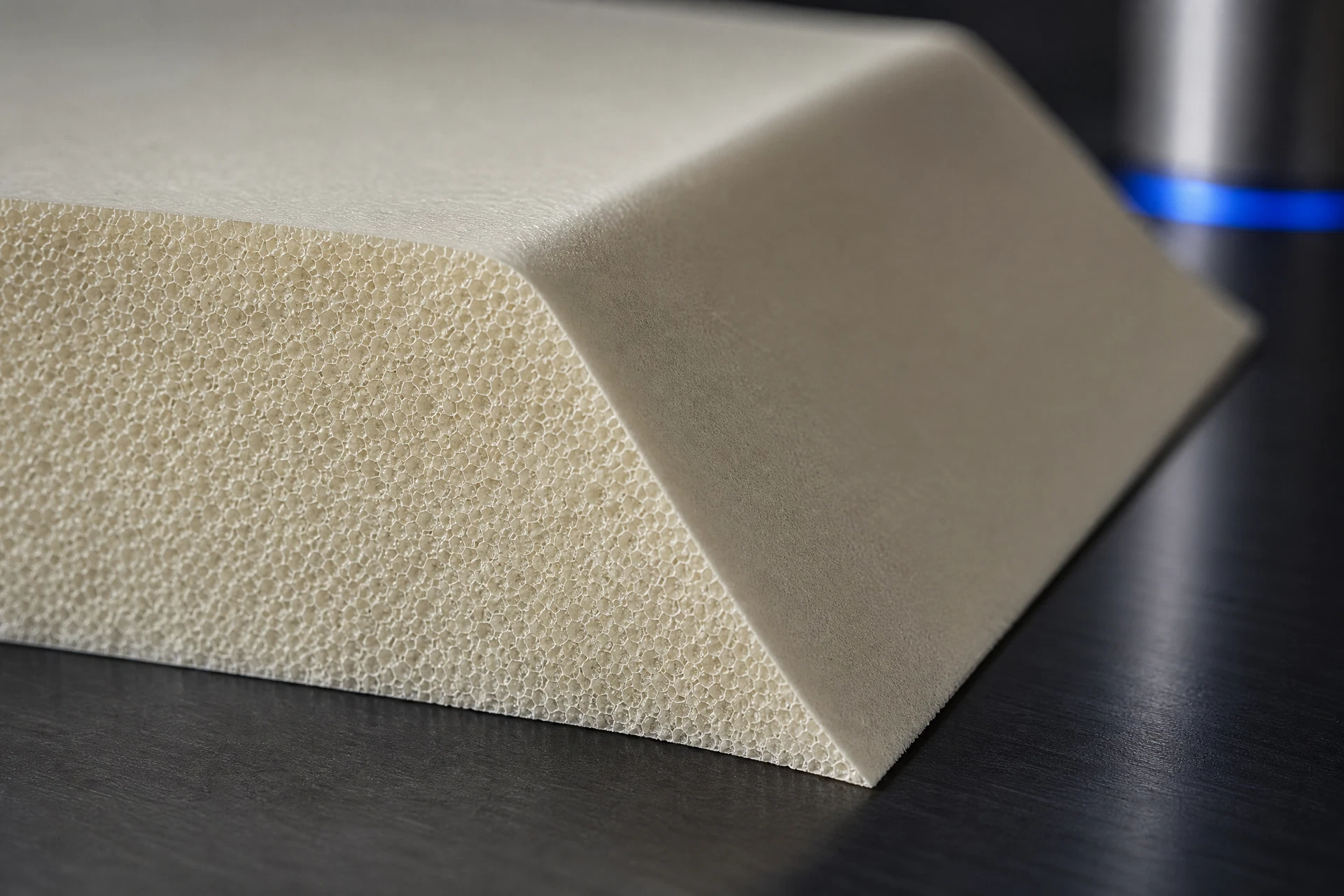
Curvature, thickness, transitions, edge treatments, face-sheet configuration, interfaces and attachment features should be described from the controlled model. These features organize the core-preparation and verification question before a grade is discussed.
Connect the material question to the process route
Explain the planned core form, CNC or forming route, laminate construction, tooling and validation path. The reference document may guide a request, but the actual material and process must be confirmed for the finished radome concept.
Keep technical evidence within its stated boundary
R/F/X data are user-provided reference-document typical values. They are not RF certificates, dielectric guarantees, radome approvals or finished-system performance claims. Request current applicable evidence for the real component.
Related questions
Questions that make the next engineering conversation more useful.
01Can generic PMI foam data validate radome RF performance?
No. RF performance must be verified for the actual grade, construction, frequency context and programme requirement.
02What belongs in a radome PMI foam enquiry?
Include CAD geometry, core thickness, facesheets, process context, candidate series and the specific RF or material documentation required.