
Specific engineering search intent
Component, geometry, and process context
Controlled material and test-data reading
Project-specific technical review
Engineering record
Component context
Core & geometry
Process & review
Start with the engineering decision
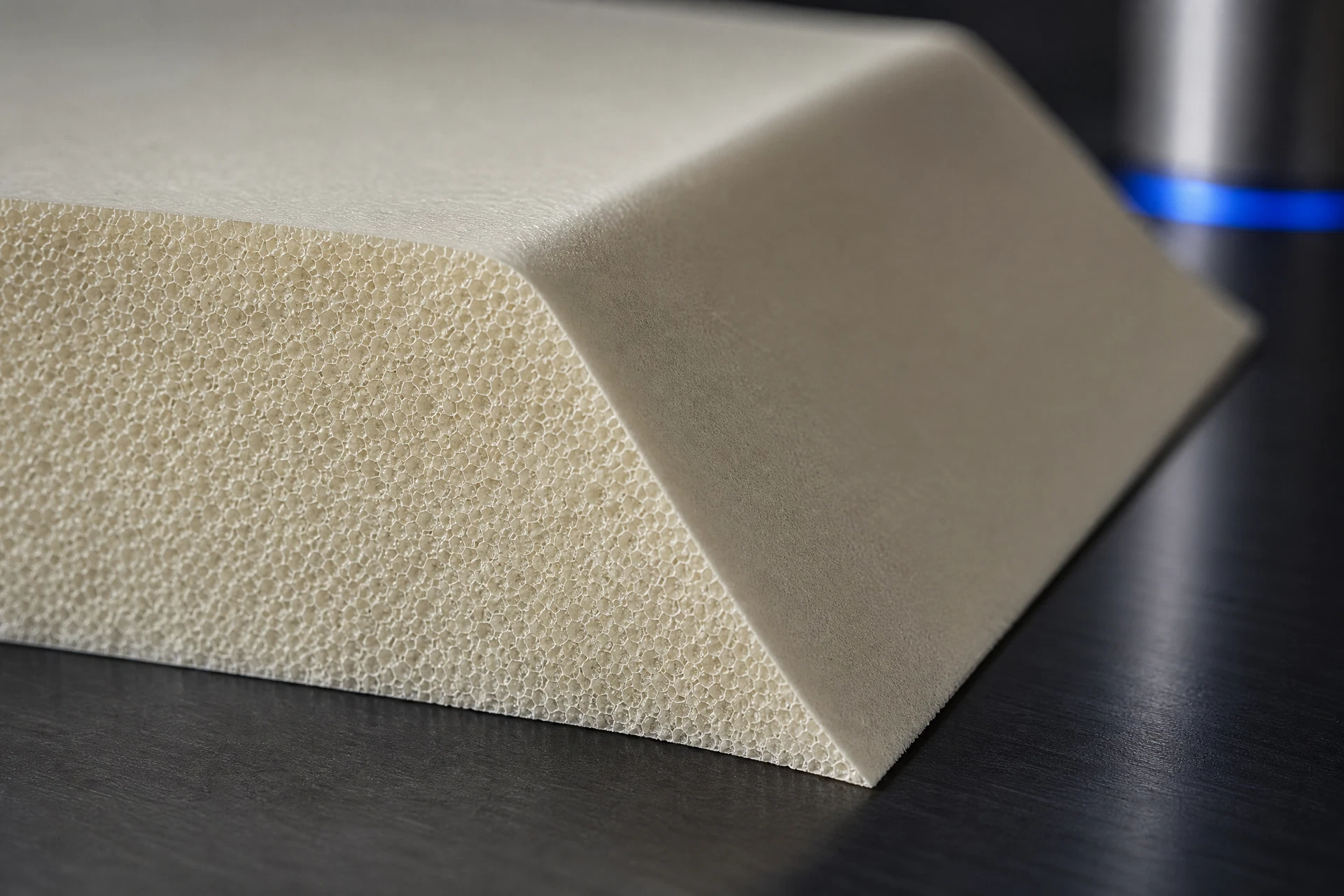
State the structural component, its geometry, the core’s intended role and the material information required by the project. A PMI foam core may be considered within a lightweight sandwich construction, but the selected grade and its suitability must be confirmed against the actual design, documentation and programme requirements.
Translate the component into a controlled core brief
Equipment covers, support structures and internal sandwich components can have contours, controlled interfaces, local features or finish-sensitive surfaces. The drawing should distinguish production-defining geometry from a visual reference and identify whether the core is supplied as a sheet, machined part or formed concept.
Connect the material question to the process route
Describe machining, bonding, laminate or assembly context before asking for a material conclusion. If the programme has requirements beyond basic structure, list them explicitly and request the relevant documentation. The website does not imply that a broad PMI material family meets medical-device regulations or special functional criteria.
Keep technical evidence within its stated boundary
Keep product requirements traceable. Material TDS, quality expectations, component geometry, programme standards and any verification plan should be reviewed as separate controlled inputs. This is more useful and safer than relying on a generic medical keyword to imply a performance outcome.
Related questions
Questions that make the next engineering conversation more useful.
01Does PMI foam automatically meet medical-device requirements?
No. Any regulatory, functional or material requirement must be evaluated against the actual programme and verified documentation.
02Can a medical-equipment structure use a CNC-prepared core?
A CNC route can be assessed from the model, core form, feature requirements and downstream assembly process.