
Specific engineering search intent
Component, geometry, and process context
Controlled material and test-data reading
Project-specific technical review
Engineering record
Component context
Core & geometry
Process & review
Start with the engineering decision
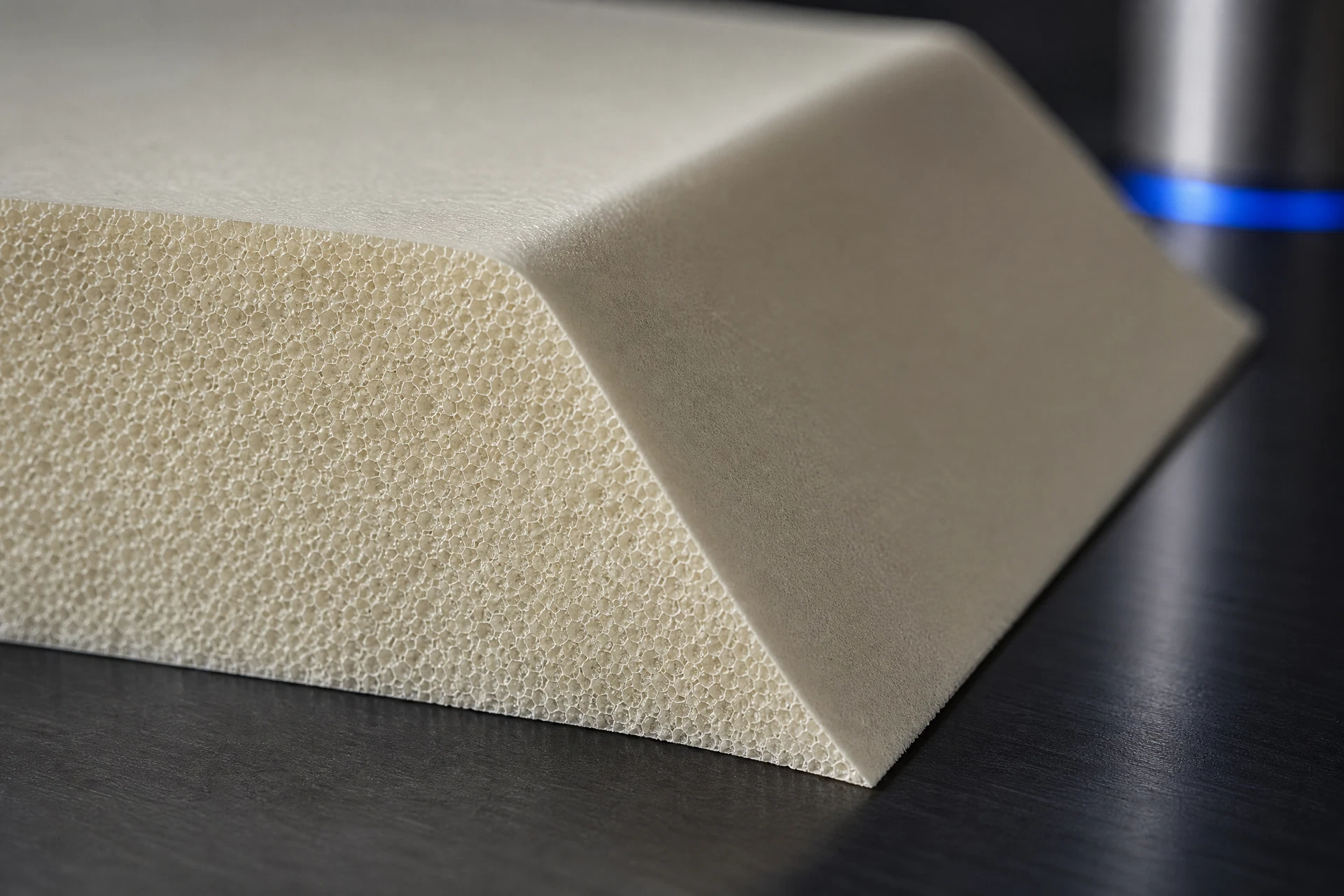
Describe the structure, face-sheet context, core thickness, curvature, local interfaces and the RF-related information that must be verified. The Chinese TDS lists dielectric values for named PMI grades, including a typical dielectric constant of 1.08 and loss tangent of 0.0052 for XK52, but these are typical reference values only. They are not a substitute for the applicable grade document or programme-level RF validation.
Translate the component into a controlled core brief
Antenna covers and supporting structures often contain curvature, transitions, attachment details and controlled surfaces. CAD review helps determine whether the core should begin as a sheet, formed element or machined geometry, and which faces or edges must be protected through the composite workflow.
Connect the material question to the process route
Keep the material, geometry and manufacture conversations connected. List resin or bonding context, temperature path, tooling and the inspection approach. If RF performance is critical, list the required measurement method, frequency context and acceptance path rather than relying on a generic website number.
Keep technical evidence within its stated boundary
RF-relevant data must be traceable to the exact grade, test method, condition and programme requirement. A product page can expose the question and point to a datasheet request; it cannot validate a finished antenna system or make a universal transmission claim.
Related questions
Questions that make the next engineering conversation more useful.
01Can generic dielectric values validate an antenna design?
No. They are only material reference data. RF performance must be confirmed for the actual grade, construction, frequency context and programme requirements.
02What belongs in an antenna-core RFQ?
Include the CAD or drawing, sandwich construction, core thickness, manufacturing context, RF data request and the required validation or documentation path.