
Specific engineering search intent
Drawing and geometry context
Process and handoff review
Controlled technical evidence
Engineering record
Component context
Core & geometry
Process & review

Define the engineering decision
The engineering decision is whether the customer drawing contains enough controlled information to support a meaningful quotation and manufacturing review. CoreMatrix Materials separates confirmed requirements from open points, including material designation, density or grade references when provided, datum strategy, feature definitions, edge conditions, inserts, cutouts, surface expectations, and any special handling notes. Clarifications are documented against the active revision so purchasing can compare responses consistently and engineering can approve changes before work proceeds.
Translate the part into a controlled geometry brief
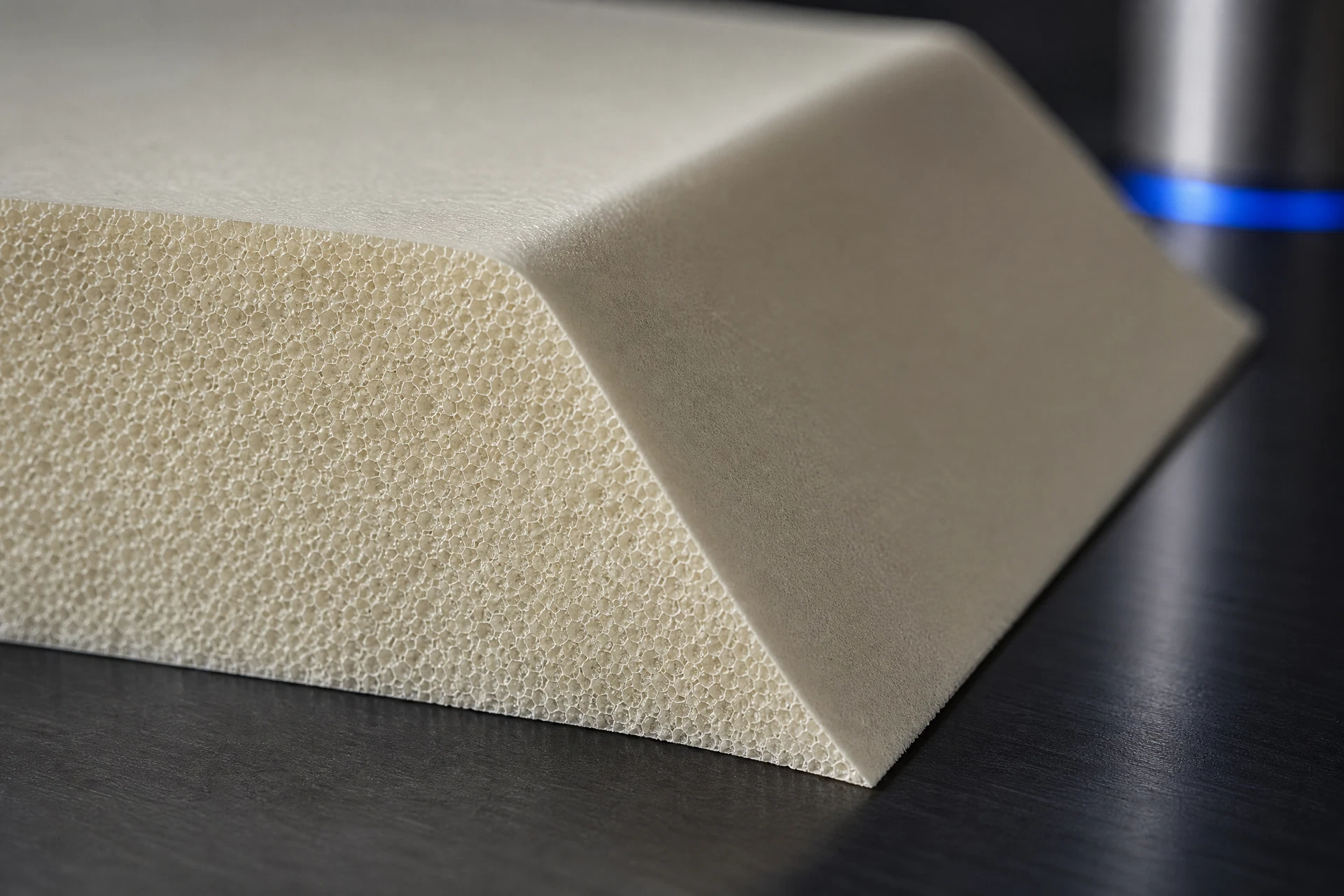
Geometry review covers the complete definition of the PMI foam core part: profile transitions, thickness regions, pockets, radii, holes, steps, bonding interfaces, trim boundaries, and datum relationships. Native CAD and drawing files are checked for alignment, missing views, ambiguous dimensions, suppressed features, and revision mismatches. The review does not invent tolerances or infer production intent. Instead, it records drawing-controlled characteristics and flags geometry requiring customer confirmation, updated documentation, or an agreed inspection method.
Connect the material question to the process route
The process moves from file intake and revision identification to technical clarification, manufacturability review, quotation preparation, and controlled handoff. Customer answers, marked-up drawings, and approved changes are linked to the applicable document version. Any proposed process assumption is identified as an assumption rather than presented as a requirement. Before prototype or production planning, the released definition, inspection approach, acceptance criteria, and validation responsibilities are aligned with the project team and purchasing contact.
Keep technical evidence within its stated boundary
Evidence is limited to the documents and project information supplied or approved during the review. Typical records may include the customer drawing, CAD revision, clarification log, quotation basis, inspection plan, sample or prototype findings, and approval status. These records support traceability but do not establish unprovided performance values, fixed tolerances, certification, RF behavior, chemical suitability, inventory, capacity, delivery timing, or customer results. Final acceptance remains bounded by the approved design definition and agreed validation activities.
Related questions
Questions that make the next engineering conversation more useful.
01What information is needed to quote PMI foam core from a customer drawing?
Provide the current drawing and CAD revision, material or grade requirements, quantity context, critical features, inspection expectations, and intended validation stage when available. Open or conflicting details can be logged for technical clarification before the quotation basis is finalized.
02How are drawing changes controlled during quotation and technical review?
Each clarification is tied to the applicable drawing or CAD revision. Markups, customer responses, assumptions, and approved changes are recorded so purchasing and engineering work from the same definition. A revised file is treated as a new controlled basis for review.