Specific engineering search intent
Drawing and geometry context
Process and handoff review
Controlled technical evidence
Engineering record
Component context
Core & geometry
Process & review
Define the engineering decision
The central decision is whether the current design package is sufficiently controlled to proceed to the next production-preparation gate. Review covers part identity, CAD and drawing alignment, revision status, material designation, datum strategy, machining access, edge conditions, features, and inspection requirements. When information conflicts or remains incomplete, the issue is recorded rather than silently interpreted. Proposed changes are separated from approved requirements, allowing stakeholders to decide what must be clarified, verified, or formally released before procurement activity.
Translate the part into a controlled geometry brief
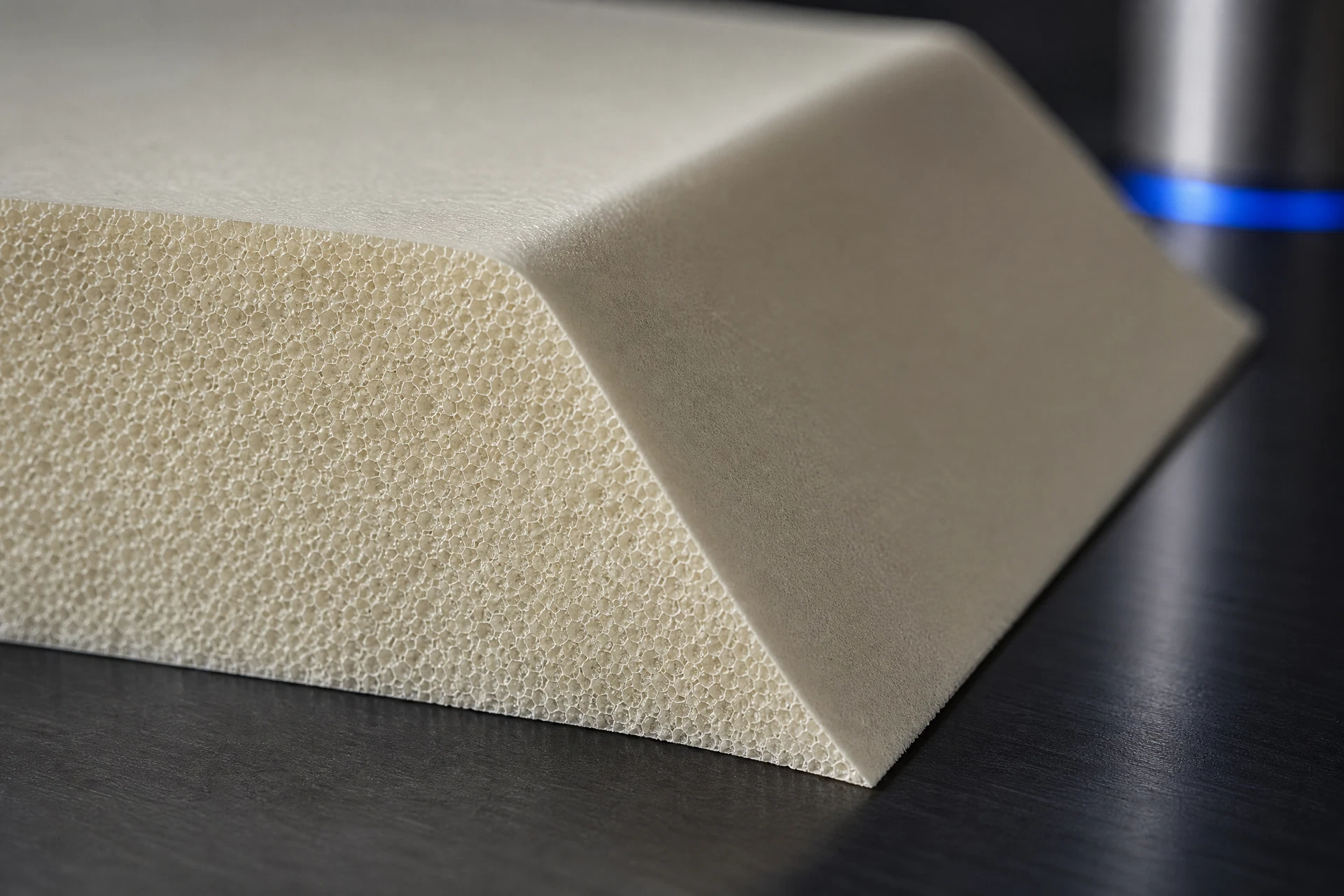
Geometry review examines the PMI foam model and drawing as a coordinated definition. The assessment may include feature hierarchy, pockets, contours, interfaces, wall transitions, cutouts, edge treatments, datum references, and areas where fixturing or tool access could affect the planned process. Model-to-drawing discrepancies, missing sections, ambiguous notes, and revision mismatches are identified for disposition. Geometry observations are documented as review items, not converted into assumed tolerances or production guarantees, preserving the design authority of the approved technical package.
Connect the material question to the process route
The handoff begins with intake and identification of the applicable files, revisions, and requested quantity or project stage. Engineering review then records geometry questions, process considerations, inspection needs, and proposed change-control actions. Responses are linked to the affected document or feature, with status maintained through review and approval. The resulting package can support an RFQ or subsequent manufacturing planning step when authorized, while distinguishing preliminary discussion from released production data and preserving an auditable path for later revisions.
Keep technical evidence within its stated boundary
Evidence is limited to the information supplied for the specific project and to activities documented during its review. Outputs may include a controlled file list, revision log, drawing and CAD comparison notes, geometry review comments, inspection planning inputs, open-question register, and validation records agreed with the customer. These materials do not establish fixed tolerances, machine capability, production capacity, delivery timing, certification, RF behavior, chemical suitability, inventory, or final performance. Such matters require applicable specifications, testing, and project approval.
Related questions
Questions that make the next engineering conversation more useful.
01How does CNC PMI foam production preparation manage design changes?
Each proposed change is tied to the affected CAD feature, drawing note, specification, or revision. CoreMatrix Materials can record the reason, disposition, responsible approval, and resulting document status so that preliminary interpretations are not confused with released manufacturing requirements.
02Can the review package be used for an RFQ?
Yes, when the technical information is sufficiently defined and the project team authorizes the handoff. The package can separate controlled inputs, assumptions, inspection expectations, and unresolved questions, helping procurement compare responses without implying unverified capability, timing, certification, or performance.