
Specific engineering search intent
Drawing and geometry context
Process and handoff review
Controlled technical evidence
Engineering record
Component context
Core & geometry
Process & review
Define the engineering decision
The engineering decision begins with confirming what the PMI foam part must do in its intended assembly and which requirements are contractual, informational, or still open. Review inputs may include material designation, density or grade references, interfaces, bonded or supported regions, surface expectations, datum strategy, and any use-specific validation plan. Rather than applying generic machining assumptions, the workflow records clarification items, identifies geometry or process risks, and separates quoted scope from verification activities that must be agreed for the project.
Translate the part into a controlled geometry brief
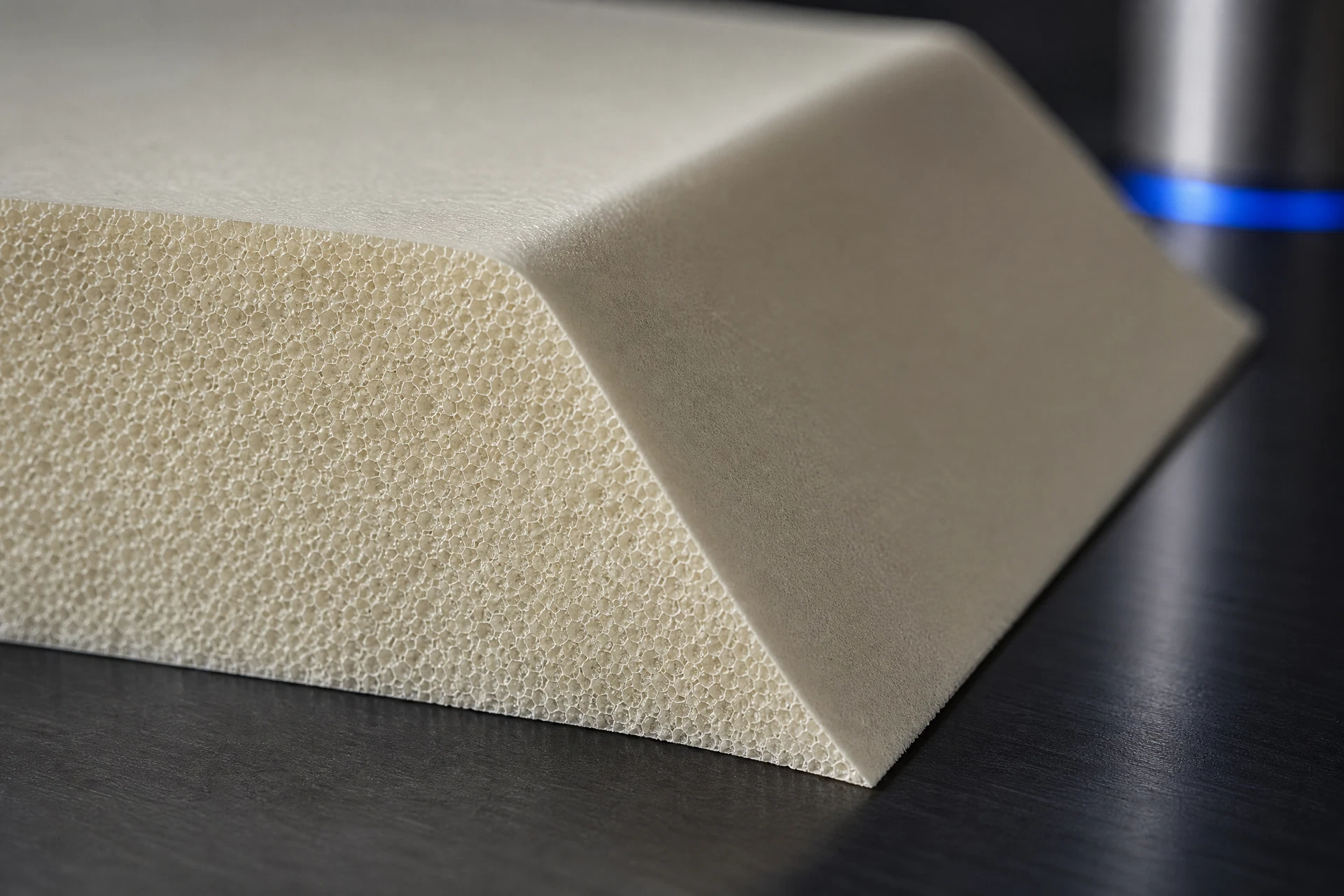
Geometry review focuses on whether the supplied solid model, drawing, and supporting files describe the same part and revision. Key checks include coordinate orientation, datum references, wall transitions, pockets, thin or fragile features, edge conditions, access, radii, symmetry, and areas requiring support or controlled handling. PMI foam can be sensitive to cutting and fixturing choices, so the handoff should identify critical-to-function surfaces and inspection points without inventing tolerances. Any missing section, reference dimension, or ambiguous feature remains an explicit engineering question.
Connect the material question to the process route
The handoff package should preserve file names, revision status, drawing notes, material references, approved markups, and the current list of open decisions. A practical flow is controlled intake, CAD and drawing comparison, manufacturability review, process-risk discussion, inspection-plan alignment, quotation boundary definition, and release of the agreed data set. For prototype or production consideration, each revision change should be traceable to its effect on geometry, tooling or fixturing approach, inspection evidence, and required project validation before work proceeds.
Keep technical evidence within its stated boundary
Evidence is limited to the documents and checks defined for the specific project. Depending on the agreed scope, the package may include reviewed CAD and drawing files, revision history, annotated questions, inspection characteristics, measurement records, photographs, material documentation supplied or requested, and validation results generated under an approved plan. These records do not establish universal PMI foam performance, chemical or RF behavior, certification status, fixed tolerances, inventory, capacity, or lead time. Acceptance remains subject to released requirements and customer review.
Related questions
Questions that make the next engineering conversation more useful.
01What information should be included when requesting CNC PMI foam custom parts?
Provide the current CAD model, drawing, revision identifier, material or grade reference, application interfaces, critical features, quantity context, and requested inspection or validation evidence. If requirements are incomplete, identify assumptions and open questions so the RFQ boundary can be reviewed before quoting.
02How are PMI foam geometry and documentation changes controlled?
Geometry and documentation are compared by revision, with changes recorded against affected features, datums, process considerations, inspection points, and validation needs. Superseded files should remain identifiable, while the quotation and manufacturing handoff use only the mutually agreed released data set.