
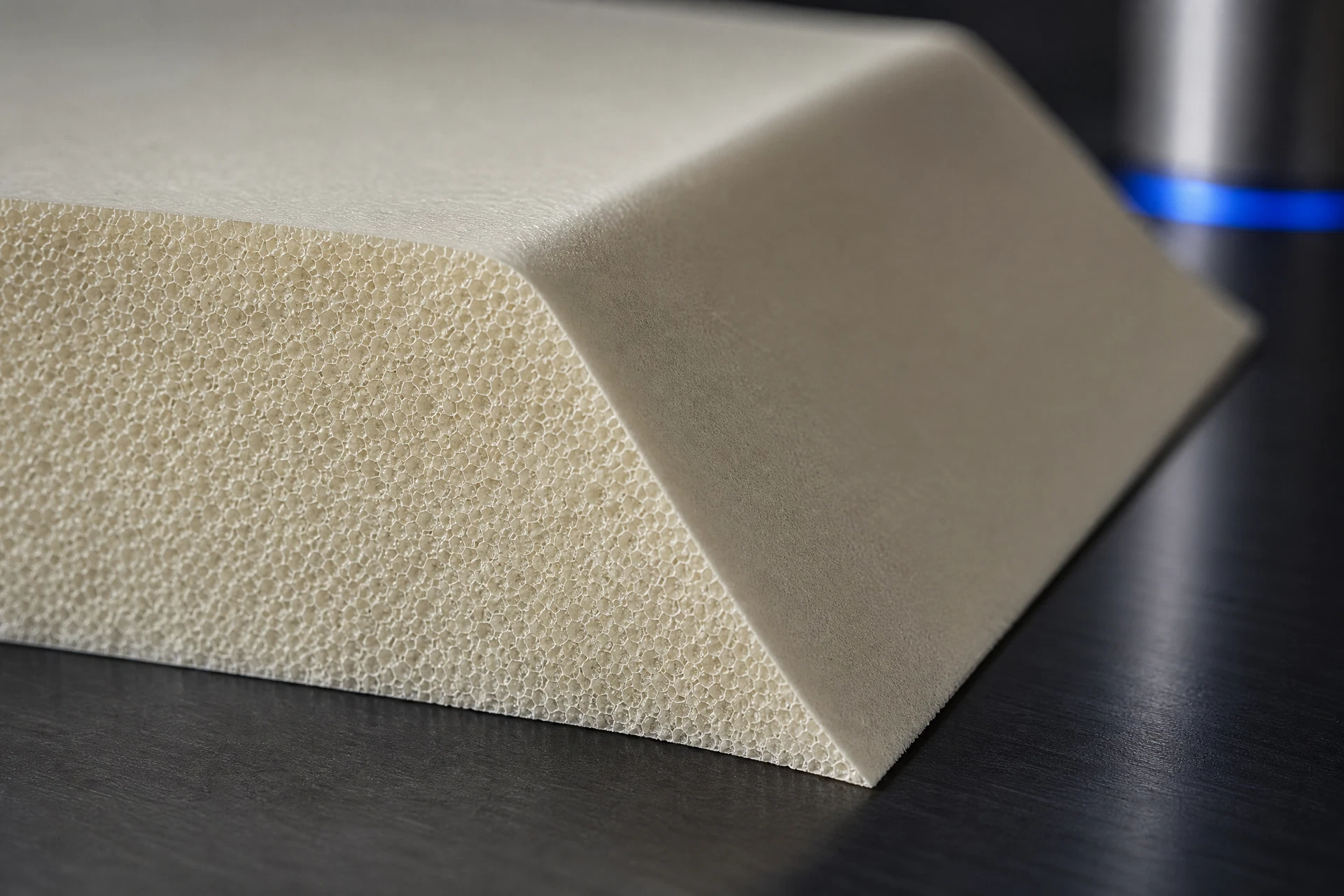
Specific engineering search intent
Drawing and geometry context
Process and handoff review
Controlled technical evidence
Engineering record
Component context
Core & geometry
Process & review

Define the engineering decision
The engineering decision should begin with the part function and hand layup workflow, not with a material name alone. Review load introduction, curvature, edge conditions, inserts, joints, access, consolidation method, and the planned laminate around the PMI foam. Then identify the applicable foam grade and request only the data relevant to the design and process. A documented review should separate confirmed information from open items, define trial articles or coupons where needed, and record who approves the final material and fabrication basis.
Translate the part into a controlled geometry brief
Provide a controlled drawing or 3D definition showing core boundaries, thickness zones, radii, tapers, steps, cut-outs, slots, inserts, joints, and datum references. Identify surfaces that must follow a contour and areas requiring local shaping or scarf preparation. Call out interfaces with skins, reinforcements, tooling, and edge closeouts. Avoid assuming standard dimensions or fixed tolerances; instead, agree measurable requirements from the project drawing and manufacturing method. Geometry review should confirm that the proposed PMI foam can be shaped, fitted, supported, and inspected without obscuring critical features.
Connect the material question to the process route
The handoff should connect design intent to a practical shop sequence: material identification, drawing review, cutting or shaping, fit-up, surface preparation, layup, consolidation, cure, trimming, and inspection. Define handling precautions, temporary supports, masking, joint treatment, and rework boundaries in the project work instructions rather than implying universal rules. Exchange the latest drawings, laminate schedule, tooling references, process parameters, inspection plan, and change status. Any trial should document observations, deviations, corrective actions, and release criteria before production use.
Keep technical evidence within its stated boundary
Request the applicable PMI foam grade designation, current technical data, material traceability information, processing guidance, and any limitations relevant to the proposed hand layup route. Treat supplier data as a starting point, not as proof of finished-part performance. Project validation may require documented coupons, representative geometry, process trials, dimensional checks, bond or interface evaluation, and inspection records selected by the responsible engineering team. This page does not establish performance values, certifications, chemical or RF behavior, availability, or acceptance of a specific design.
Related questions
Questions that make the next engineering conversation more useful.
01What information is needed to review PMI foam for hand layup?
Share the part drawing or model, laminate and skin concept, intended load paths, foam grade under consideration, tooling and cure route, joining details, inspection expectations, and known manufacturing constraints. The review can then identify evidence gaps and define project-specific validation steps.
02Can a generic PMI foam recommendation replace project validation?
No. A generic recommendation cannot establish suitability for a particular geometry, laminate, process, or inspection regime. Confirm the applicable grade and current data, then use representative trials, documented measurements, and engineering approval to close the project’s validation boundary.