Specific engineering search intent
Drawing and geometry context
Process and handoff review
Controlled technical evidence
Engineering record
Component context
Core & geometry
Process & review

Define the engineering decision
The engineering decision is whether the STEP model is sufficiently defined for controlled review and what additional information is required before quoting or manufacturing consideration. Review may address open or closed surfaces, thin walls, deep pockets, edge conditions, split strategy, fixturing references, and features that could deform during handling. The released reference is selected by revision and approval status, while superseded files remain traceable rather than silently replaced. This approach separates geometry acceptance from assumptions about material behavior, inspection capability, or final application performance.
Translate the part into a controlled geometry brief
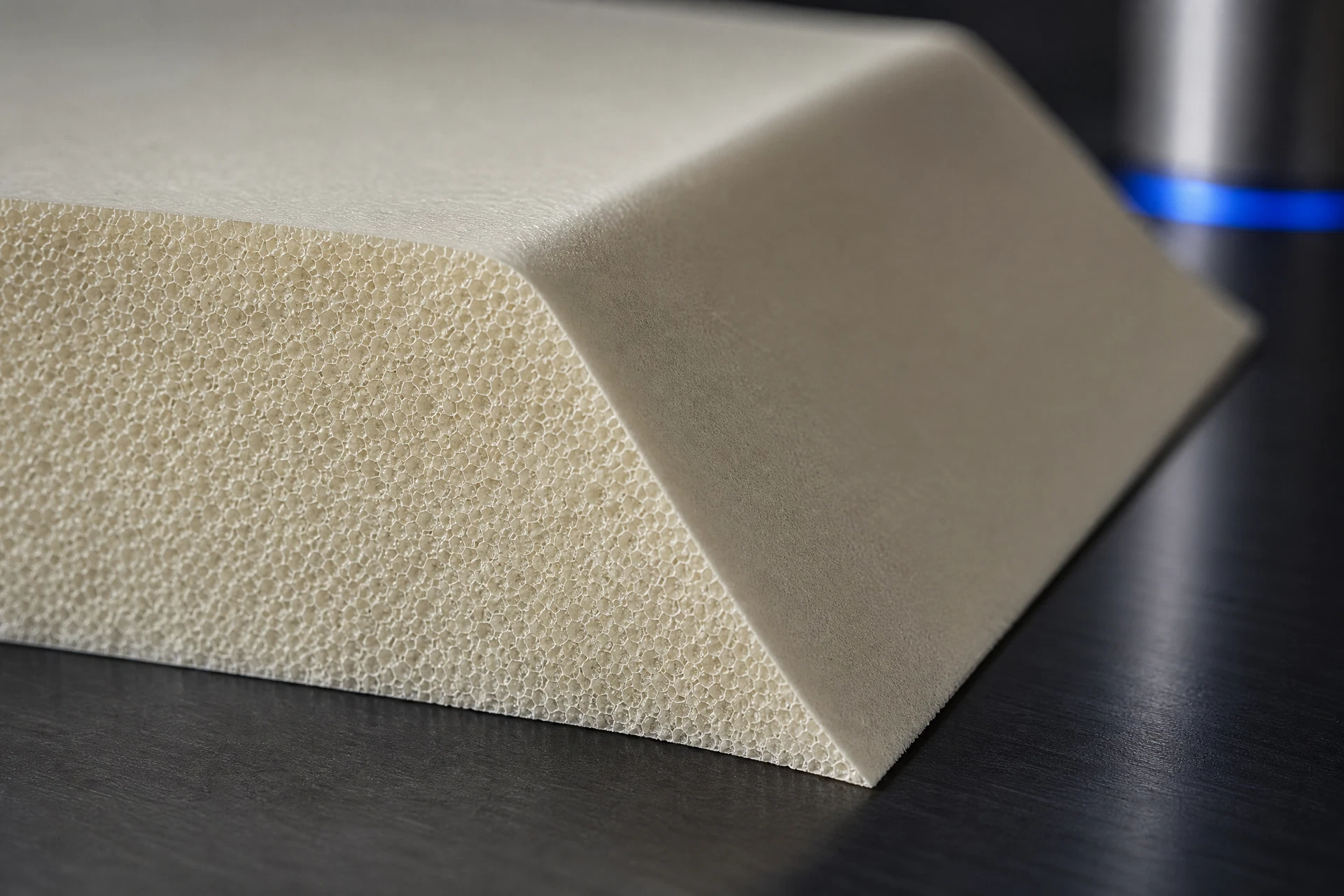
Geometry review compares the STEP model with drawings, marked-up PDFs, sketches, and other supplied records when available. Key checks include units, coordinate orientation, datums, origin strategy, nominal form, wall transitions, radii, holes, slots, pockets, trimming boundaries, and interfaces to mating parts. PMI foam can require careful support and handling considerations, so features vulnerable to distortion are identified for engineering discussion rather than assigned unverified limits. Questions about missing dimensions, ambiguous profiles, or revision conflicts are returned as a documented clarification list.
Connect the material question to the process route
After intake, files are inventoried and assigned a traceable revision context. The model is checked for translation integrity, visualized against the drawing package, and reviewed for manufacturability and inspection access. A controlled work package can then identify the reference geometry, required information, proposed datum interpretation, inspection points, and open decisions. RFQ communication reflects the current document set and clearly separates quoted assumptions from confirmed requirements. Any later model or drawing change is assessed for impact before the handoff is updated.
Keep technical evidence within its stated boundary
Project evidence is limited to the supplied files, revision history, review notes, inspection records, and validation results generated for the specific program. A STEP file alone does not establish material certification, environmental behavior, RF or chemical performance, final-part suitability, or guaranteed dimensional capability. Those matters require customer-defined requirements and appropriate project testing or documentation. CoreMatrix Materials can preserve the reviewed model, clarification log, and inspection basis so later decisions remain connected to the correct geometry and revision.
Related questions
Questions that make the next engineering conversation more useful.
01Can CoreMatrix Materials review a PMI foam core STEP file before an RFQ?
Yes. The review can assess model integrity, drawing alignment, revision status, feature definition, manufacturability questions, and inspection planning. The output identifies missing information and assumptions; it does not convert an incomplete STEP file into an unconditional production specification or guarantee a fixed quote condition.
02What should accompany a PMI foam core STEP model for engineering review?
Provide the current STEP file, drawings or marked-up dimensions, material and density requirements, datum or interface intent, revision identifiers, quantity context, and any validation criteria. Supplying the complete controlled package helps distinguish confirmed requirements from items that still need clarification.