
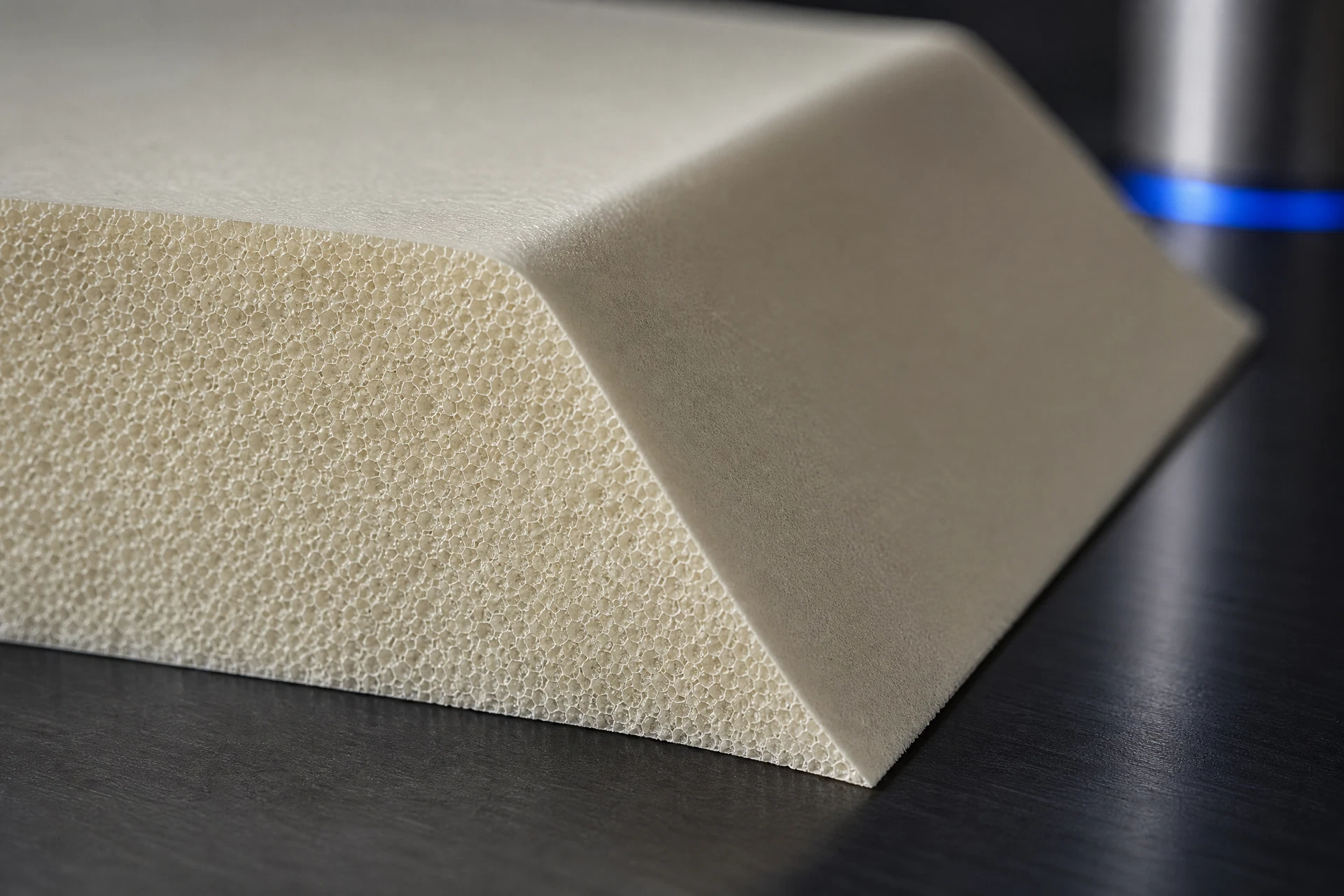
Specific engineering search intent
Drawing and geometry context
Process and handoff review
Controlled technical evidence
Engineering record
Component context
Core & geometry
Process & review

Define the engineering decision
The engineering decision is whether the pocket definition is sufficiently controlled to support an RFQ and a verifiable manufacturing route. Review factors include the current drawing revision, datum or coordinate scheme, depth and boundary callouts, edge conditions, adjacent features, handling requirements, and any surfaces designated for protection. PMI foam behavior and application requirements remain project-specific; no fixed machining allowance, tolerance, or material-performance conclusion is assumed. Open questions are recorded before quote alignment, so purchasing receives a clear distinction between released requirements, proposed process choices, and validation items.
Translate the part into a controlled geometry brief
Pocket geometry is checked against the controlled CAD model and associated drawing rather than an isolated sketch or verbal description. The review considers pocket length, width, depth definition, corner transitions, wall continuity, floor condition, draft or radii if specified, and proximity to cutouts, inserts, skins, or reference surfaces. Feature-protection notes identify regions requiring controlled handling, inspection, masking, or sequencing. Revision identity, units, coordinate references, and model-to-drawing consistency are captured so the quoted feature can be compared with the same definition at inspection and handoff.
Connect the material question to the process route
The process begins with RFQ intake, file and revision review, material and application clarification, and identification of pocket-specific manufacturing risks. A controlled setup and machining approach is then evaluated against the approved geometry, workholding needs, access, chip or debris control, and protection of surrounding features. Handoff records connect the quote assumptions to the released files, inspection plan, and any prototype or first-article validation step. Changes are routed through revision control rather than incorporated informally, preserving traceability from inquiry through acceptance review.
Keep technical evidence within its stated boundary
Evidence is limited to the documents and checks defined for the individual project: released CAD and drawings, revision history, review notes, process assumptions, inspection records, photographs or measurement outputs where applicable, and validation results agreed in advance. These records can demonstrate whether the pocket matched the approved definition and whether protected features were reviewed, but they do not establish universal PMI foam performance, chemical or RF behavior, certification status, or fixed capability claims. Acceptance criteria, sampling, and test methods remain subject to customer requirements and project approval.
Related questions
Questions that make the next engineering conversation more useful.
01What should be included in an RFQ for CNC pocketing PMI foam?
Provide the controlled CAD model, drawing revision, material identification, pocket purpose, units, datum scheme, feature-protection notes, inspection expectations, and any required validation steps. If a requirement is still under development, label it as an open item so quote assumptions are not mistaken for released engineering criteria.
02How are nearby PMI foam features protected during pocket machining?
Protection is planned from the approved geometry and drawing notes, with attention to adjacent walls, cutouts, interfaces, and reference surfaces. The project review may define handling, sequencing, inspection, or documentation controls, but the specific method depends on the released design, material condition, and customer-approved validation requirements.