
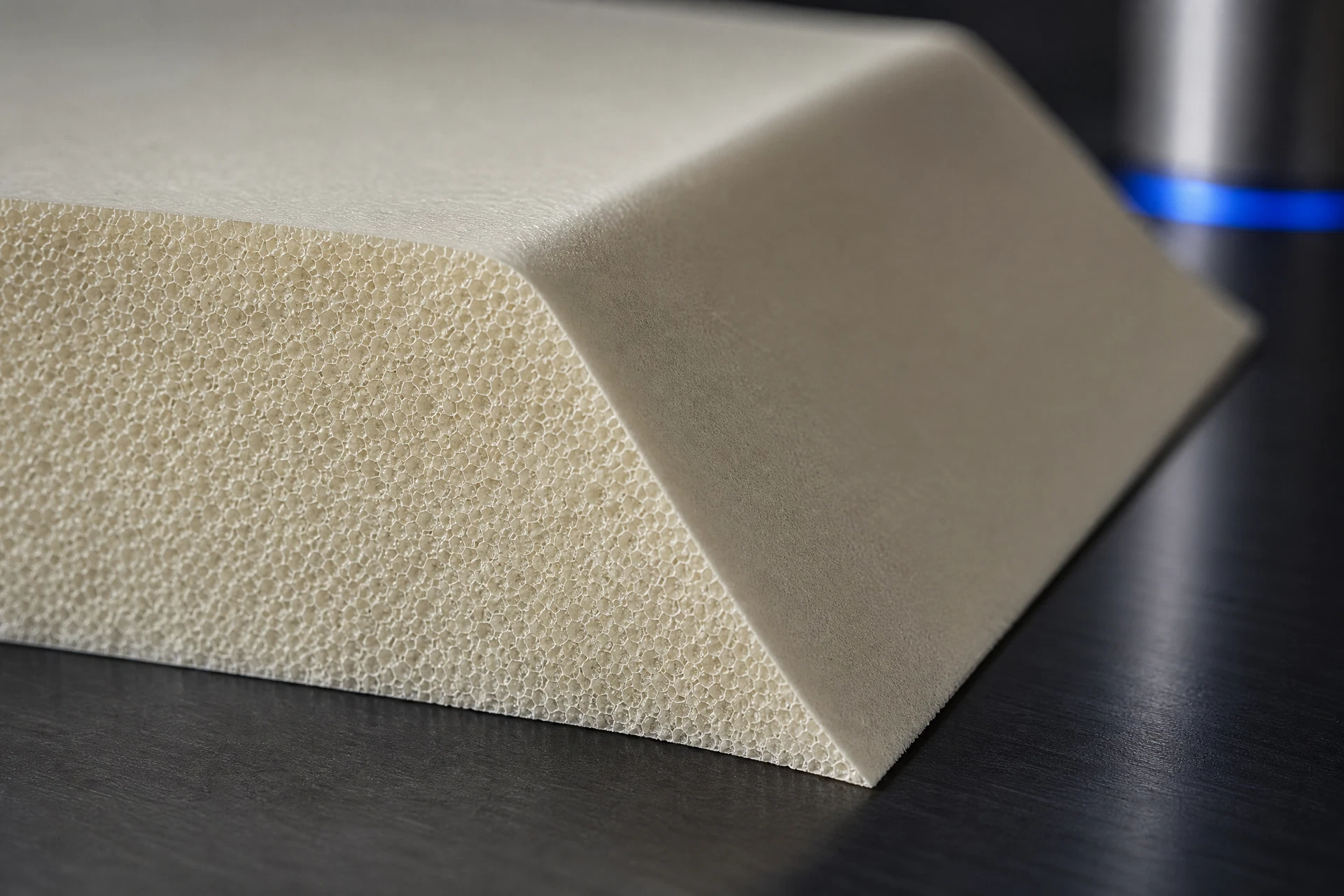
Contour and forming intent
Grade and thickness documentation
Tooling and process sequence
Post-form inspection and handoff
Engineering record
Component context
Core & geometry
Process & review
Define the final contour before discussing formability
The model should show curvature, transitions, bend areas, local thickness, attachment interfaces and surfaces that need geometric control. A light curve, a deep contour and a double-curved part can create very different requirements. By starting with the finished geometry, the team can assess whether a sheet, machined blank, formed core or a different preparation route is relevant.
Connect material information to the actual process window
The selected grade documentation, temperature path, tooling, pressure or vacuum context, time at condition and cooling sequence need to be reviewed together. A generic thermoforming article cannot approve every shape or condition. It can identify what must be confirmed before a project moves from concept to a controlled process plan.
Protect the geometry after forming
A formed core still needs a defined handoff to CNC finishing, laminate lay-up or assembly. The drawing should identify the surfaces and dimensions that require inspection, the handling risks and any packing or part-identification expectations. This gives the next operation a stable engineering reference.
Related questions
Questions that make the next engineering conversation more useful.
01Can a web page state a universal PMI foam forming limit?
No. Forming suitability depends on the exact grade, thickness, contour, tooling and process conditions.
02What helps a thermoforming technical review?
Provide the CAD or drawing, core thickness, candidate grade information, tooling concept, temperature context and the required post-form geometry.